Introduction
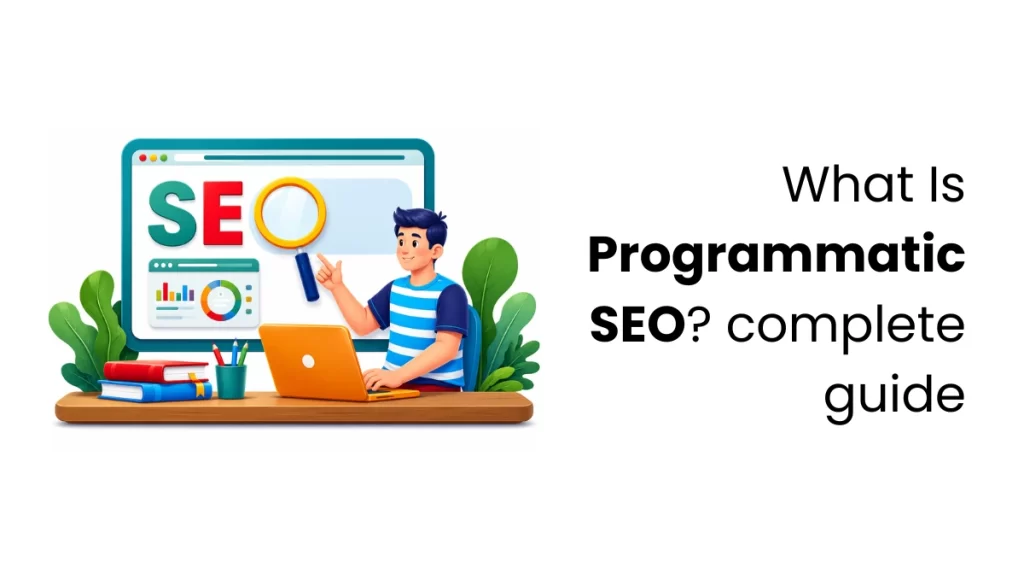
Ranking a website is becoming more competitive every day. Creating a few web pages is no longer enough to rank higher on search engines, especially for large websites with many products, services, or locations. Businesses today need scalable SEO strategies to target a large number of search queries and reach more users online. Programmatic SEO plays an important role here. It is the automated creation of large numbers of optimized web pages using templates, databases, and automation tools. Instead of building every page manually, businesses can quickly and efficiently generate hundreds or thousands of pages targeting different search queries.
Many popular platforms, such as Amazon and Canva, use this strategy to improve their online visibility and attract more organic traffic. Programmatic SEO helps websites rank for multiple keywords, improve search engine performance, and reach a larger audience. When implemented correctly, it can save time, increase website traffic, and support long-term business growth through search engines.
In this blog, you will learn what Programmatic SEO is, how it works, its benefits, and the important steps required to implement Programmatic SEO successfully on your website.
What Is Programmatic SEO?
Programmatic SEO, also known as pSEO, is an SEO strategy that uses automation, templates, databases, and AI tools to create a large number of web pages targeting different search keywords. Instead of manually creating each page one by one, businesses can automatically generate hundreds or even thousands of landing pages using the same page structure with different data.
In Programmatic SEO, the overall design and structure of the pages usually remain the same. However, the content changes based on what users are searching for, such as a location, product, or service. This helps websites create many useful pages quickly, rank for different long-tail keywords, and attract more organic search traffic.
For example, if a travel website wants to create pages for “Best Places for Digital Nomads,” it can use a single template and automatically generate pages for different cities or countries using data such as cost of living, internet speed, climate, and safety.
Many websites in industries such as travel, e-commerce, real estate, and job portals use Programmatic SEO to quickly create large numbers of pages while maintaining consistent design and structure. When used properly, it helps businesses save time, reduce manual effort, improve online visibility, and attract more search engine traffic.
Difference Between Programmatic SEO and Regular SEO
Both Programmatic SEO and Regular SEO help websites rank higher in search results and attract more visitors. However, the way content is created and managed differs across the two methods. The table below explains the main differences between Programmatic SEO and Regular SEO in a simple way.
| Aspect | Regular SEO | Programmatic SEO |
| Content Creation | Pages are created manually | Pages are created automatically using templates and data |
| Time Required | Takes more time to create each page | Generates multiple pages in less time |
| Content Type | Detailed and unique content | Scalable content with a similar structure |
| Process | Requires manual writing and optimization | Uses automation, databases, and AI tools |
| Best For | Blogs, guides, and educational content | Large websites targeting many keywords |
| Keyword Targeting | Targets specific or competitive keywords | Targets long-tail and location-based keywords |
| Scalability | Difficult to scale quickly | Easy to create hundreds or thousands of pages |
| Maintenance | Each page must be updated individually | Multiple pages can be updated through one template. |
How Does Programmatic SEO Work?
Programmatic SEO works by using automation, templates, and structured data to create a large number of optimized landing pages. Instead of creating each page manually, businesses can generate multiple pages automatically based on different keywords, locations, products, or services.
Find Scalable Keyword Patterns
The first step in Programmatic SEO is finding keyword patterns that can be repeated with small changes. These are usually long-tail keywords that people commonly search for on search engines. These keywords may include locations, products, services, prices, or comparison terms.
For example:
- Best hotels in Kochi
- SEO VS GEO
- Restaurants near Vyttila
- Best headphones under 1000
These keywords are more specific than general search terms and are usually easier to rank for. They help websites connect with users who already know what they are looking for, which can bring more relevant traffic to the website.
Collect Structured Data
After identifying keywords, the next step is to collect data to create the pages. This data can come from:
- APIs
- Databases
- Spreadsheets
- Product inventories
- User reviews
- Pricing feeds
This data helps make each page unique and relevant.
Create a Template
A template is then designed for the landing pages. The page structure usually stays the same, while the content changes automatically based on the data.
The template may include:
- Headings
- Descriptions
- Images
- FAQs
- Reviews
- Pricing details
- Call-to-actions
For example, a restaurant website can use a template like:
“Best {{restaurant type}} Restaurants in {{city}}”
This can automatically generate pages such as:
- Best Italian Restaurants in Bangalore
- Best Chinese Restaurants in Trivandrum
- Best Pizza Places in Bangalore
Generate Pages Automatically
Once the template and data are ready, automation tools generate hundreds or even thousands of pages instantly. This helps businesses scale content production quickly without manually creating every page.
Optimize and Monitor Performance
After publishing the pages, businesses can track and monitor rankings, traffic, and user engagement. Templates and content can then be improved based on performance and search trends.
To make Programmatic SEO successful, pages should always provide users with valid, useful information. Creating low-quality or duplicate pages only for rankings can negatively affect SEO performance.
Common Programmatic SEO Mistakes to Avoid
Programmatic SEO can help websites grow quickly, but if it is not implemented properly, it can negatively affect rankings and user experience. Below are some common mistakes businesses should avoid while using Programmatic SEO.
Developing Low-Quality Content
One of the major mistakes in Programmatic SEO is creating pages with no valuable information. Simply changing keywords, locations, or product names within the same content is not enough. Search engines prefer pages that provide real value to users.
Every page should have meaningful, relevant information, such as descriptions, FAQs, reviews, comparisons, images, or helpful insights. Pages with duplicate or low-quality content may struggle to rank and can even be penalized by search engines.
Ignoring Search Intent
Just because you can create thousands of pages does not mean every page will be useful. Many businesses create pages without checking whether users are actually searching for those keywords.
Before developing pages, it is necessary to understand what users are looking for and whether the keyword has real search intent. Creating pages that match user intent improves engagement, rankings, and conversions.
Using Poor Template Design
In Programmatic SEO, the template serves as the foundation for all generated pages. If the template is poorly designed, every page created from it will also perform poorly.
A good template should include:
- Clear headings
- Useful content sections
- FAQs
- Internal links
- Call-to-actions
- Proper SEO optimization
Investing time in building a strong template helps improve the quality and performance of all pages.
Not Having an Internal Linking Strategy
Internal linking is very important in Programmatic SEO. If generated pages are not connected properly within the website, search engines may find it difficult to crawl and index them.
Linking related pages together helps:
- Improve user navigation
- Distribute page authority
- Increase crawlability
- Improve rankings
Pages without internal links often become “orphan pages” that receive little traffic and visibility.
Not Updating Content Regularly
Many businesses create programmatic pages and leave them unchanged for long periods. However, search engines prefer updated and relevant content.
Product details, prices, reviews, statistics, and other information should be refreshed regularly to maintain accuracy and improve rankings. Having an automated system to update pages can help keep content fresh and useful for users.
Conclusion
Programmatic SEO helps businesses create many web pages quickly and improve their visibility in search engines. By using templates, automation, and structured data, websites can target different search terms and bring more organic traffic without having to build every page manually.
However, simply generating thousands of pages is not enough. The pages should provide useful and relevant information that helps users. Good content quality, proper keyword targeting, user-focused pages, and regular updates are important for getting better SEO results.
As SEO and digital marketing continue to change, learning modern strategies like Programmatic SEO can help businesses and marketers stay ahead of the competition. Joining a training on digital marketing in Kochi can help you learn the latest SEO techniques, automation methods, and digital marketing skills needed in today’s online industry.
FAQs
1. Is Programmatic SEO secure for websites?
Yes, Programmatic SEO is secure when the pages provide useful, unique, and relevant information to users. Creating duplicate or low-quality pages only for rankings can negatively affect SEO performance.
2. Can Programmatic SEO help local businesses?
Yes, local businesses can use Programmatic SEO to create pages for different locations, services, or products and attract more local search traffic.
3. What type of content is used in Programmatic SEO?
Programmatic SEO usually uses structured content such as product details, reviews, FAQs, pricing, comparisons, service information, and location-based data.
4. Does Programmatic SEO require coding knowledge?
Basic technical knowledge can help, but many no-code and low-code tools today make Programmatic SEO easier for beginners and marketers.
5. How many pages can be created using Programmatic SEO?
Depending on the data and templates used, businesses can create hundreds, thousands, or even millions of pages through Programmatic SEO.
6. What is the main advantage of Programmatic SEO?
The biggest advantage is scalability. It allows businesses to quickly create large volumes of optimized content while saving time and manual effort.