Introduction
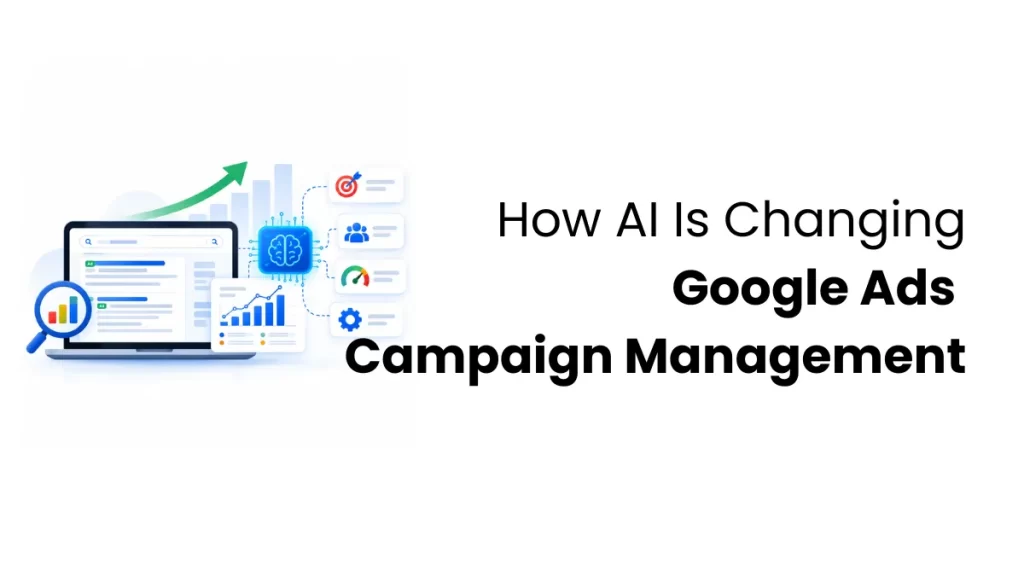
Google Ads has changed quite a bit over the years, and AI now plays a much bigger role in managing campaigns. Tasks like finding the right audience, adjusting bids, testing ad copy, and managing budgets can now be handled with much less manual effort.
AI can respond to user behaviour, conversion data, and campaign performance in real time. This helps marketers save time and manage campaigns more efficiently, especially when working with multiple campaigns. But AI does not replace the marketer. You still need to set clear goals, understand the data, choose the right strategy, and review the results before making important decisions.
In this article, we’ll look at how AI is changing Google Ads campaign management and how marketers can use it effectively.
The Shift From Manual Bidding to AI-Powered Optimisation
Google Ads management once involved a lot of manual work. Marketers had to adjust keyword bids, check performance by device and location, review search terms, and make frequent changes based on campaign data.
AI has changed this process. Google’s automated bidding strategies can adjust bids at each auction based on signals such as device, location, time, and user behaviour.
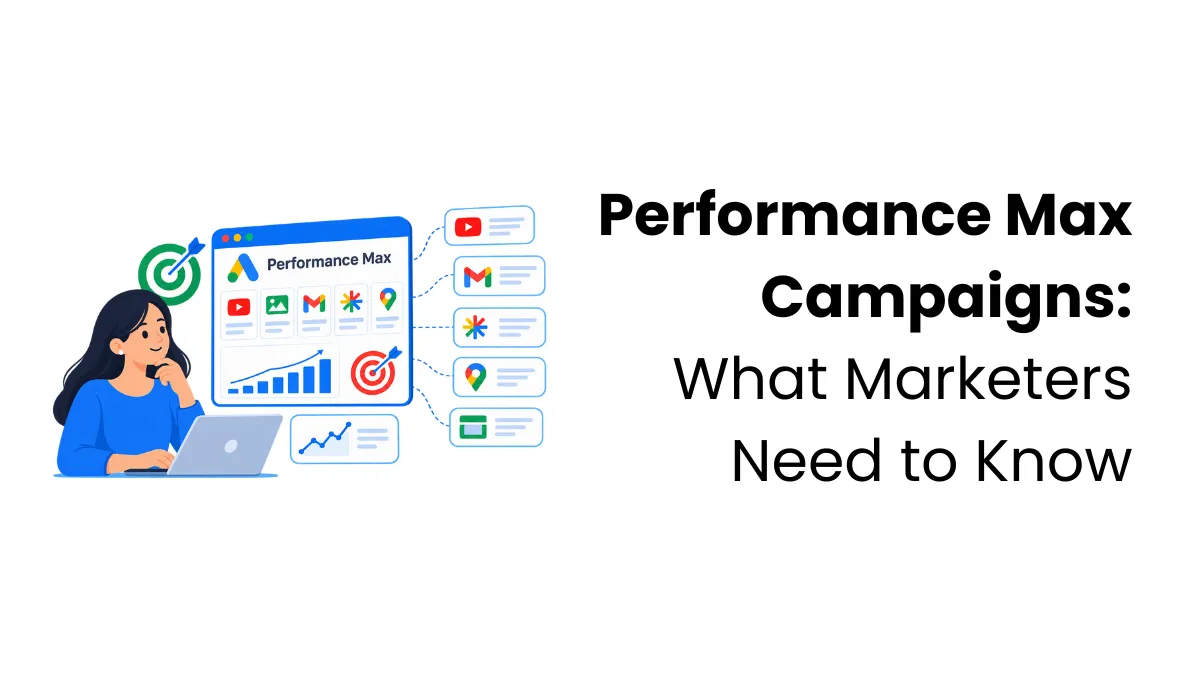
Performance Max also uses Google’s AI to decide how to distribute a campaign’s budget across different Google channels based on the advertiser’s goals. Responsive Search Ads can test different combinations of headlines and descriptions to find combinations that are more relevant to individual searches.
This doesn’t mean marketers have lost control of their campaigns. Their role has simply changed. Instead of making every adjustment manually, they can focus on setting clear goals, tracking conversions correctly, structuring campaigns properly, and giving Google the right data to work with.
How AI Is Changing Google Ads Campaign Management
Google Ads is becoming less dependent on manual campaign management. AI and machine learning now help advertisers make faster decisions by analysing campaign data, user behaviour, and other signals.
Automation can now handle many tasks in Google Ads, such as adjusting bids, finding the right audiences, testing different ads, and monitoring campaign performance. This saves marketers time, but their role remains important. Instead of handling every small task manually, they can spend more time on planning campaigns, creating better content, and focusing on the overall business goals.
Here are some of the main ways AI is changing Google Ads.
1. Automated Bidding Takes Over Many Manual Decisions
Managing bids manually can become difficult when a campaign has hundreds of keywords, audiences, and auctions. AI makes this process more dynamic by adjusting bids based on the chances of getting a conversion.
Google’s Smart Bidding strategies include:
- Target CPA: Works towards getting conversions at a target acquisition cost.
- Target ROAS: Adjusts bids based on the expected value of conversions.
- Maximise Conversions: Tries to generate as many conversions as possible within the budget.
- Maximise Conversion Value: Focuses on getting greater conversion value from the available budget.
These strategies can consider different signals at auction, including device, location, time, and user context. This lets bids change with the situation rather than relying on one fixed bid.
2. AI Helps Find More Relevant Audiences
Reaching the right people matters as much as getting more impressions. AI helps Google identify users who may be interested in a product or service by analysing different signals and patterns.
Advertisers can use audience solutions such as in-market audiences and their own customer data to guide targeting.
For example, someone actively researching a particular product type may be more relevant to an advertiser than someone who simply fits a broad demographic group.
AI can help identify these patterns at a scale that would be difficult to manage manually.
3. Ad Creation Becomes More Flexible
Writing several ad versions for testing can take a lot of time. Responsive Search Ads make this easier by allowing advertisers to provide multiple headlines and descriptions.
Google can combine these assets in different ways and determine which combinations best match different searches.
Generative AI can also assist marketers with ideas for headlines, descriptions, and other campaign assets. These suggestions can speed up the writing process, while marketers can still edit the content to make sure it fits the brand and campaign.
4. Campaign Data Can Reveal Problems Earlier
Google Ads accounts generate a large amount of performance data. Manually reviewing it all can make it hard to spot every important change.
AI-powered insights can help identify unusual movements and patterns, such as:
- A sudden increase in advertising costs
- A drop in conversions
- Changes in search behaviour
- Shifts in campaign performance
- Areas that may need further optimisation
This gives marketers a starting point for investigating what has changed instead of having to find every issue manually.
5. Routine Campaign Tasks Can Be Automated
Not every campaign decision needs to be made manually. Automation can take care of certain repetitive actions based on rules and campaign conditions.
For example, advertisers can set up automated actions to adjust budgets, pause campaigns that meet specific criteria, or manage other routine settings.
This can save time, particularly when managing multiple campaigns at once. At the same time, marketers should review automated actions regularly to make sure they still make sense for the campaign.
6. AI Can Help Make Better Use of Advertising Budgets
A fixed budget does not automatically mean that every campaign or audience should receive the same amount of spending.
AI can use performance and conversion signals to adjust bids and respond to demand changes. If the likelihood of conversion changes, automated bidding can respond accordingly.
This is especially useful when customer behaviour or competition changes during different periods.
The marketer still decides the overall budget and campaign priorities. AI helps manage the decisions within those boundaries.
7. Campaigns Can Reach Users Across Multiple Google Platforms
Google Ads now gives advertisers opportunities to reach people across more than just Search.
Depending on the campaign type, ads can appear across platforms and properties such as:
- Google Search
- YouTube
- Display
- Discover
- Gmail
Performance Max uses Google’s AI to find opportunities across these channels based on the campaign’s objective.
This lets advertisers reach potential customers at different points in their journey instead of relying entirely on search ads.
8. AI Makes Ongoing Testing Easier
A campaign that works today may not perform the same way several months later. Search trends, competitors, customer preferences, and market conditions can all change.
AI makes it easier to manage and analyse multiple variations of ads, targeting, and bidding strategies.
Marketers can use the results to identify what is working and make changes based on actual campaign data. Regular testing also helps prevent campaigns from relying on outdated assumptions.
9. Better Data Helps Measure Business Results
Clicks and impressions provide useful information, but they do not tell the whole story. Businesses also need to know what happens after someone clicks an ad.
With proper conversion and revenue tracking, AI-powered Google Ads systems can use business outcome data to optimize campaigns towards meaningful results.
This helps advertisers understand which campaigns generate conversions or higher-value actions and make more informed decisions about where to focus their budget.
10. Marketers Still Need to Be in Control
Automation can handle many technical and repetitive parts of Google Ads, but marketers still play an important role.
They are responsible for decisions such as:
- Defining campaign objectives
- Choosing suitable KPIs
- Providing accurate conversion data
- Reviewing automated recommendations
- Creating brand-appropriate messaging
- Checking whether campaign results support business goals
AI can process data quickly, but it does not understand every business situation or brand requirement on its own.
The Changing Role of Google Ads Managers
AI is changing what campaign management looks like. Marketers no longer need to spend all their time making small manual adjustments.
Instead, they can focus more on campaign structure, strategy, creative direction, data quality, testing, and understanding customer behaviour.
Real-World Uses of AI in Google Ads
AI is not limited to one type of Google Ads campaign. Businesses in different industries can use automation in different ways depending on what they want to achieve.
For example:
- E-commerce businesses can use automated bidding to respond to changes in demand, product performance, and seasonal buying patterns.
- Local businesses can use audience and location signals to reach people most likely to need their services.
- B2B companies can use conversion data and audience signals to focus campaigns on users more likely to become leads.
These examples show that AI’s value depends on how it is applied to a particular business and its advertising goals.
Why AI Still Needs Human Direction
Automation can handle much of campaign management, but simply turning on AI does not guarantee better results.
The quality of the information given to the system matters. Clear campaign goals, accurate conversion tracking, relevant ad assets, and a well-structured account all affect how effectively automation can work.
Marketers also need to review performance and understand the reasons behind changes rather than accepting every automated recommendation without checking it.
A good approach is to let AI handle repetitive, data-heavy tasks while marketers remain responsible for strategy, messaging, and important campaign decisions.
What to Expect From AI in Google Ads
AI will likely become even more integrated into digital advertising. Future developments may make campaign systems better at identifying patterns, predicting customer behaviour, and adapting campaigns to changing conditions.
Some areas to watch include:
- More useful predictions: AI may provide earlier indications of changes in demand and campaign performance.
- More relevant advertising: Automated systems can use more signals to match ads with user intent.
- Greater automation across channels: Campaign management may become increasingly connected across Search, YouTube, Display, and other Google properties.
- Smarter reporting: AI can make large amounts of campaign data easier to understand by highlighting important changes and trends.
For marketers, this means understanding how these tools work will become increasingly important.
Key Takeaways
AI is changing Google Ads in several important ways:
- Automated bidding can adjust bids based on real-time signals.
- AI can help advertisers reach more relevant audiences.
- AI can handle ad creation and testing more efficiently.
- Performance tools can identify trends and unusual changes.
- Automation can reduce repetitive campaign work.
- Budget management can respond to changing campaign performance.
- Google campaigns can reach users across multiple channels.
- Conversion data can help AI optimise towards business outcomes.
- Human review remains important throughout the process.
The main shift is from doing every task manually to managing and guiding automated systems effectively.
Conclusion
AI has become an important part of modern Google Ads management. It can process large amounts of data, adjust campaigns quickly, and reduce the time spent on routine tasks.
However, AI still works best when marketers understand how to use it properly. Clear campaign goals, accurate tracking, relevant content, and regular performance checks are all important for getting useful results from automation.
For anyone looking to build practical skills in this area, digital marketing training in Kochi can be a useful way to learn how AI, Google Ads, SEO, social media, and other digital marketing tools work together. Understanding both the technology and the strategy can help marketers use AI more effectively while keeping business goals at the centre of their campaigns.
FAQs
1. How is AI used in Google Ads?
AI helps Google Ads handle many parts of campaign management, including bidding, audience targeting, ad testing, budget management, and performance tracking. It looks at campaign data and user behaviour to make adjustments based on the goals you set.
2. Can AI manage Google Ads campaigns on its own?
AI can automate many parts of a Google Ads campaign, but it still needs human input. Marketers need to set campaign goals, choose the right settings, provide accurate conversion data, and regularly review performance.
3. How does AI help with Google Ads bidding?
AI helps Google Ads decide how much to bid for each search. It considers factors like the user’s device, location, time, audience, and past conversion data, then adjusts the bid based on the likelihood of a conversion.
4. Can AI create Google Ads copy?
Yes. Google Ads uses AI to help generate and test ad assets. For example, Responsive Search Ads can automatically combine different headlines and descriptions to find combinations that perform well.
5. How does AI help with audience targeting?
AI can use information such as search behaviour, interests, website activity, and conversion data to identify people more likely to be interested in a product or service. This can make audience targeting more relevant.
6. Does AI reduce the need for Google Ads marketers?
AI reduces the amount of manual work involved in campaign management, but it does not remove the need for marketers. Human input is still important for strategy, creative decisions, campaign planning, and understanding business goals.