Introduction
Online advertising is no longer limited to choosing one platform or ad format. Businesses today need to reach potential customers across different channels while making the most of their advertising budget. Google Performance Max campaigns make this easier by combining multiple Google advertising channels into a single campaign. From Search and YouTube to Display, Discover, Gmail, and Maps, PMax uses Google’s AI to help advertisers connect with relevant audiences based on their goals. However, getting good results requires more than simply setting up a campaign and letting it run. Marketers need to provide the right creative assets, audience signals, search themes, and conversion data. In this guide, we’ll explore what Performance Max campaigns are, how they work, and the key strategies marketers should know to get better results.
What Is Performance Max?
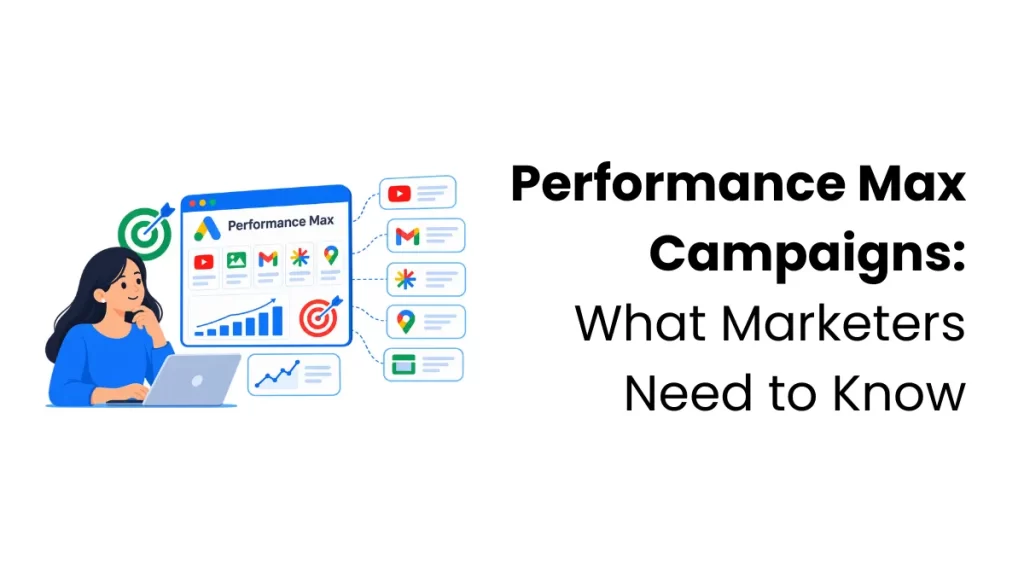
Google Performance Max is a goal-based campaign type that allows advertisers to reach potential customers across Google’s advertising channels through a single campaign. Instead of creating separate campaigns for Search, Shopping, YouTube, Display, Discover, Gmail, and Maps, advertisers can manage their advertising efforts in one place.
Performance Max uses Google’s AI and machine learning to decide where an ad should appear, which audience is most likely to respond, and how much to bid for each opportunity. These decisions are based on the campaign goal, conversion data, audience signals, creative assets, and other information the advertiser provides.
For example, imagine an online education company promoting a digital marketing course. A potential customer may first come across the brand while watching a related video on YouTube. Later, they may see a display ad while browsing another website and eventually search for the course on Google. Performance Max can help the advertiser reach that person across different Google channels as they move through the buying journey.
One of Performance Max’s main benefits is its cross-channel approach. It can help businesses reach people at different stages, from creating initial awareness to encouraging conversions. The campaign can use different types of creative assets, including headlines, descriptions, images, logos, and videos, and Google can combine these assets to create ads suited to different placements.
However, Performance Max doesn’t mean marketers can set up a campaign and leave everything to automation. The quality of the information provided to Google still matters. Clear conversion goals, relevant creative assets, useful audience signals, accurate conversion tracking, and well-defined search themes can give the system better information to work with.
Performance Max is also intended to complement keyword-based Search campaigns rather than replace them. Search campaigns give advertisers more direct control over keywords and search queries, while Performance Max can help find additional conversion opportunities across Google’s wider advertising ecosystem.
How to Set Up a Performance Max Campaign
Setting up a Performance Max campaign is fairly simple once you know the basic steps. The exact options may vary depending on your business and campaign goal.
1. Choose Your Campaign Goal
Start by creating a new campaign in Google Ads. Choose what you want to achieve, such as Sales or Leads, and select Performance Max as the campaign type.
2. Set Your Budget and Bidding
Next, decide what you want Google to optimise for, such as getting more conversions or increasing conversion value. Set a daily budget that fits your business.
3. Choose Your Location and Language
Select the locations and languages you want to target. Make sure these settings match the people you want your ads to reach.
4. Add Your Creative Assets
Now add the content Google will use to create your ads. This includes headlines, descriptions, images, logos, and videos. Use different variations, but make sure they all relate to the product or service you are promoting.
5. Review and Launch
Before launching, quickly go through your budget, targeting, conversion tracking, landing pages, and assets. If everything looks right, you can publish the campaign.
6. Keep Checking the Results
Once the campaign is running, give it some time to collect data. Then check your conversions, costs, and asset performance. Based on what you see, make small changes and keep testing what works best.
Key Elements of a Successful Performance Max Strategy
Performance Max relies heavily on automation, but that does not mean marketers should leave everything to Google’s AI. The quality of your campaign structure, creative assets, audience signals, and conversion data can all influence how well the campaign performs.
Here are six important areas to focus on when managing Performance Max campaigns in 2026.
Build a Clear Campaign Structure
A well-planned structure gives Google’s systems more relevant information. One common mistake is placing very different products or services into the same asset group.
Instead, organise asset groups around related products, services, or themes. For example, a training institute could create separate asset groups for digital marketing, finance and accounting, and data analytics courses. This allows the headlines, descriptions, images, and videos to match the specific offering.
However, avoid creating too many campaigns or asset groups without a clear reason. The goal is to create enough structure for relevance while still giving each campaign sufficient data to optimise.
Use High-Quality Creative Assets
Performance Max can show ads across several Google channels, including Search, Shopping, YouTube, Display, Discover, Gmail, and Maps. Each placement has different creative requirements, so a strong mix of assets matters.
Your asset groups can include:
- Headlines
- Long headlines
- Descriptions
- Images in different formats
- Logos
- Videos
Using different creative variations gives Google more options to test combinations and match them with different audiences and placements.
The Ad Strength indicator can also help identify whether an asset group has enough variety. However, don’t add assets to improve your score. Focus on creating useful, relevant content that clearly communicates the product or service.
Give Google Useful Audience Signals
Audience signals help provide additional information about the type of people you want to reach. They do not work as traditional targeting restrictions. Instead, they give Google’s system useful starting points when identifying potential customers.
You can use information such as:
- Customer Match lists
- Website visitors
- Existing customer data
- Custom segments
- Relevant interests
- Search-related intent signals
For example, if you are advertising a digital marketing course, you could provide audience signals related to people researching digital marketing certifications, SEO courses, Google Ads training, or similar topics.
The better your signals match your ideal customer, the more useful they are as campaign input.
Use Search Themes to Guide AI
Search themes give advertisers another way to communicate the types of searches and interests that are relevant to their business.
They can be particularly useful when the information available through your landing pages, product feeds, or other campaign inputs does not fully describe the audience or search intent you want to target.
For example, a business selling accounting software could use search themes related to:
- Accounting software for small businesses
- GST accounting software
- Business bookkeeping software
- Online accounting solutions
Search themes are not traditional keywords that force Google to show an ad only for those searches. Instead, they provide additional signals that can help Google’s AI identify relevant search intent.
Choose the Right Smart Bidding Strategy
Bidding is another important part of Performance Max management. Your bidding strategy should match the conversion goal you are trying to achieve.
For example:
- Maximise Conversions can be suitable when your primary goal is to generate more conversions.
- Maximise Conversion Value can be useful when different conversions have different values.
- Target CPA can help guide the campaign toward a desired cost per acquisition when you have enough conversion data.
- Target ROAS can help businesses focused on achieving a particular return from advertising spend.
When launching a new campaign, it is often better to give the system enough time and conversion data to learn before applying overly restrictive targets. Setting an aggressive CPA or ROAS target too early can limit the number of opportunities available to the campaign.
Once the campaign has gathered enough data and performance becomes more consistent, you can adjust your bidding targets based on actual results.
Monitor and Optimise Performance
Automation does not remove the need for regular campaign management. Review Performance Max campaigns regularly to identify what is working, what needs improvement, and where ad spend may be wasted.
Some areas to monitor include:
Search queries: Review available search query insights to identify relevant and irrelevant searches. Where appropriate, negative keywords can help prevent ads from appearing for unwanted searches.
Asset performance: Check how individual headlines, descriptions, images, and videos are performing. Replace weaker assets with new variations and continue testing different messages.
Ad placements: Review available placement information to identify placements that may not suit your business or brand. Where appropriate, use available controls to limit unwanted exposure.
Channel performance: Look at how the campaign is performing across different Google channels. This can help you understand where conversions and value are coming from and whether your campaign structure needs adjustment.
The key is to treat Performance Max as an ongoing optimisation process, not a campaign you set up once and leave untouched.
Conclusion
Google Performance Max can be a useful option for businesses that want to reach customers across different Google channels without managing separate campaigns for each one. But automation alone doesn’t deliver strong results. A clear campaign structure, relevant creative assets, accurate conversion tracking, and regular optimisation all play an important role.
As Google continues to improve Performance Max, marketers also need to keep up with new features and use them effectively. Building these practical skills can make a real difference in paid advertising campaigns.
If you’re looking to build a career in digital marketing, choosing a digital marketing training institute in Kochi can help you learn tools like Google Ads, Performance Max, SEO, social media marketing, and analytics through hands-on training.
FAQs
How does Performance Max work?
Performance Max lets Google handle much of the work for you. It uses the information you provide, such as your campaign goal, audience, images, videos, and conversion data, to figure out which people to show your ads to and where they are most likely to perform well. It then adjusts the bids and placements based on how the campaign is performing.
What assets are needed for a Performance Max campaign?
You can provide headlines, descriptions, images, logos, and videos. Adding a good mix of relevant assets gives Google more options when creating ads for different placements.
Is Performance Max suitable for beginners?
Yes. Performance Max can be a good choice if you’re new to Google Ads because Google handles much of the bidding and ad placement automatically. Still, it helps to understand the basics, such as setting up conversion tracking, choosing the right campaign settings, and regularly checking your results.
How long does it take to see results from Performance Max?
There is no fixed timeline. A campaign usually needs some time to collect data and learn from conversions. Results can vary depending on your budget, conversion volume, audience, industry, and campaign goals.
What is the difference between Performance Max and Search campaigns?
Search campaigns mainly focus on showing ads for relevant search queries, while Performance Max can reach users across several Google channels. Many advertisers use both to cover different parts of the customer journey.
How does Performance Max work?
Performance Max uses Google’s AI and machine learning to decide where ads should appear, who to reach, and how much to bid based on your campaign goals, conversion data, audience signals, and creative assets.