Introduction
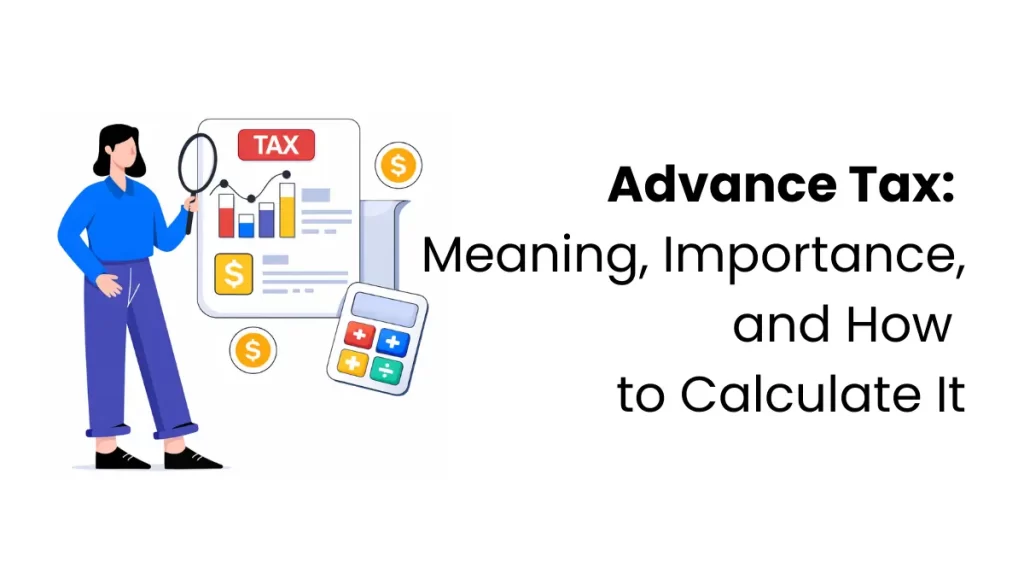
Leaving taxes until the last minute can put you under a lot of pressure, especially when the amount to be paid is high. Advance tax is meant to avoid that situation. Instead of paying everything at once at the end of the financial year, you can pay your tax in smaller parts as you earn during the year. This makes it easier to manage your money and stay prepared.
If your tax amount is 10,000 or more in a financial year, you need to pay advance tax. Ignoring the deadlines can lead to extra charges. Having a clear idea of how advance tax works can help you stay on track. In this blog, we’ll walk you through the basics, who should pay for it, the key dates, and how you can handle it without confusion.
Understanding Advance Tax
Advance tax is a simple concept that helps you pay your income tax gradually, rather than all at once at the end of the financial year. It follows the idea of “pay-as-you-earn,” meaning you pay taxes as your income comes in. This makes managing your finances easier and avoids the stress of a large last-minute payment.
In India, advance tax becomes applicable when your total tax liability exceeds ₹10,000 in a financial year. It applies not just to businesses but also to salaried individuals, freelancers, and anyone earning additional income, such as rent or capital gains. The tax is paid in installments on due dates set by the Income Tax Department, helping you spread out the burden.
To pay advance tax, you must estimate your total income for the year and calculate the corresponding tax. Using this estimate, you make payments in installments throughout the year. If your income changes, you can revise the remaining payments as needed.
Overall, advance tax helps you stay disciplined with your tax payments, avoid penalties, and keep your financial planning smooth and under control.
Who Should Pay Advance Tax?
Advance tax applies to taxpayers whose estimated tax liability is more than ₹10,000 in a financial year. It applies to different types of individuals and entities based on their income sources.
Salaried Individuals with Additional Income
For salaried employees, the employer usually deducts tax as TDS. If there is additional income—such as interest, rental income, or capital gains—and the total tax liability exceeds ₹10,000 after TDS, advance tax must be paid on the extra amount.
Freelancers and Professionals
Self-employed individuals, including freelancers, doctors, lawyers, and consultants, are responsible for estimating their income and paying advance tax, as their income is generally not subject to TDS.
Businesses
Businesses of all sizes, including sole proprietors, partnerships, and companies, must pay advance tax when their overall tax payable during the year crosses the basic limit.
NRIs with Income in India
NRIs earning income in India also fall under this rule if they have a significant tax liability.
Senior Citizens (Exception)
Resident individuals aged 60 years or above are exempt from advance tax if they do not have income from a business or profession.
Importance of Paying Advance Tax
Paying advance tax makes managing your finances easier. Instead of a heavy tax burden at the end, you pay in steps. Here’s why it matters:
Better Financial Planning: Advance tax lets you spread payments over the year. You avoid paying a large sum at once, making cash flow and expense management easier.
Avoids Penalties and Interest: Paying taxes on time avoids interest and penalties. This keeps your costs lower and prevents stress later.
Keeps You Legally Compliant: If you owe over ₹10,000 in taxes, you must pay advance tax. Paying on time keeps you within tax rules and avoids legal trouble.
Reduces Year-End Pressure: Advance tax prevents last-minute rushes. You pay gradually and end the year smoothly.
Encourages Financial Discipline: Estimating income and paying taxes regularly keeps you aware of your earnings and expenses, improving your habits.
How to Calculate Advance Tax
Calculating advance tax may sound complicated, but it becomes simple when you follow the steps. The idea is to estimate your income and tax obligations in advance so you can pay them in installments throughout the year.
1. Estimate Your Total Income
Begin by calculating your complete income for the financial year. Include all sources like salary, business or professional income, rental income, capital gains, interest, or dividends.
2. Subtract Deductions and Exemptions
Subtract eligible deductions like investments (Section 80C), health insurance (80D), standard deduction, HRA, and exemptions to get taxable income.
3. Calculate Your Tax Liability
Apply current tax slab rates to your taxable income to find your yearly tax liability.
4. Adjust TDS and Other Credits
Deduct TDS, TCS, and any tax rebates from your tax liability.
5. Calculate Advance Tax Payable
The balance is your advance tax, to be paid in installments by the due dates.
By following these steps, you can plan your taxes better and avoid last-minute confusion.
Mistakes to Avoid While Paying Advance Tax
Advance tax is useful, but small mistakes can cost you time and money.
Miscalculating Your Income
Include all income sources like salary, rent, interest, or capital gains. Apply correct deductions.
Underestimating Your Earnings
Keeping income estimates low may result in penalties later.
Ignoring Other Income Sources
Focusing only on salary and ignoring income from dividends or rental earnings is a common mistake. All types of income should be considered while calculating advance tax.
Using Wrong Tax Slabs
Applying incorrect tax rates or slabs can result in paying either less or more tax than required. Always check the latest tax rates before calculating.
Forgetting TDS or Previous Payments
Not changing TDS or earlier advance tax payments can affect your final calculation. This may lead to overpaying or underpaying taxes.
Missing Due Dates
Advance tax has installment deadlines. Missing them causes interest charges. Setting reminders will be helpful in this situation.
Depending Only on Rough Estimates
Depending on guesswork rather than reviewing actual income can lead to errors. It’s better to check and update your calculations regularly during the year.
Conclusion
Understanding and managing advance tax throughout the year helps you avoid large payments and makes it easier to stay financially prepared.
When you estimate your income correctly, track your payments regularly, and follow the due dates, it becomes much easier to avoid penalties and last-minute stress. It also helps you stay organized with your finances throughout the year.
If you’re someone who wants to get better at handling taxes or build a career in this field, learning through accounting courses in Kerala can give you practical exposure to concepts like taxation, compliance, and financial planning.
FAQs
When should I pay advance tax?
Advance tax is paid in installments on June 15, September 15, December 15, and March 15. Pay on time to avoid interest and ensure smooth tax planning.
How can I correct a mistake in an advance tax payment?
Correct errors in your advance tax payment via the challan correction option on the Income Tax portal. Have your challan number or assessment year ready.
Will I be penalized if I don’t pay advance tax?
Yes. If required to pay advance tax and you don’t, you’ll pay 1% monthly interest on the unpaid amount. This increases your tax liability.
Can I claim deductions while estimating advance tax?
Yes. Claim deductions for Section 80C investments, Section 80D health insurance, and other eligible benefits to calculate more accurate taxable income and avoid overpayment.
How can I check the status of my advance tax payment?
Check your advance tax payment status by logging in to the Income Tax e-filing portal and visiting your tax payment or history section. You can view or download the challan as needed.