Having a great product or service is not enough if people do not know about it.
For example, a small clothing brand has just started in your town. The products are good, the prices are reasonable, and the store looks great. But there is one problem: not enough people know it exists.
The brand starts with Instagram, posting new collections, styling ideas, and short videos. People begin to notice the products and visit the profile. Soon, Instagram alone is not enough. The brand needs a website, search visibility, online ads, and email to stay connected with customers. All of these activities are part of digital marketing.
What Is Digital Marketing?
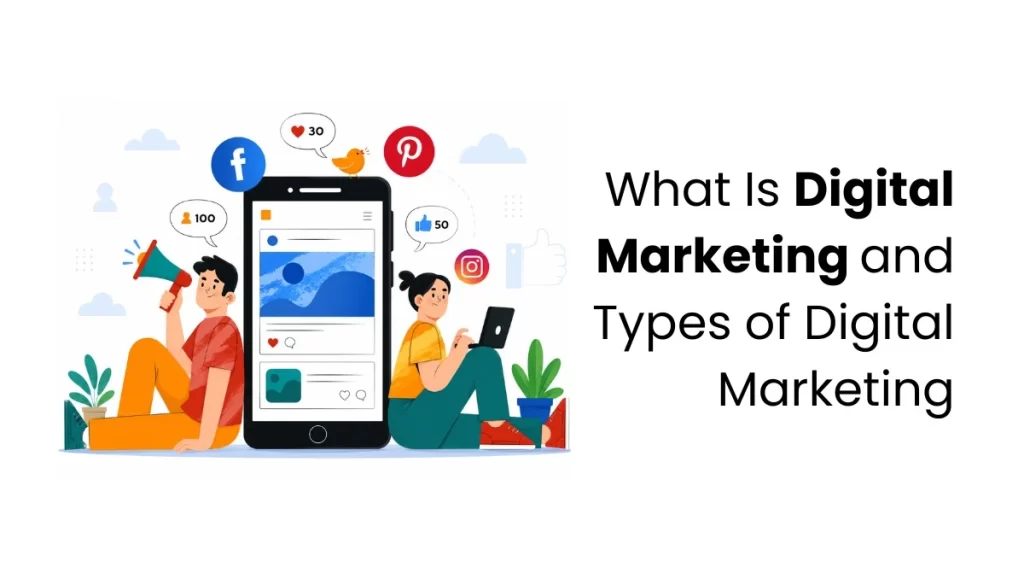
Digital marketing is the promotion of a business, product, service, or brand through digital channels such as search engines, websites, social media, email, and online advertising.
But digital marketing is more than posting on Instagram or running ads. Different methods serve different purposes. A business may use social media to build awareness, SEO to attract organic search traffic, content to answer customer questions, paid advertising to reach a specific audience, and email to communicate with existing customers.
Simply, digital marketing helps a business reach people, create interest, encourage action, and maintain customer relationships.
How Does Digital Marketing Work?
Digital marketing usually begins with one basic question:
Who are you trying to reach?
Once a business understands its target audience, it can choose the digital channels most likely to reach them.
The basic process looks like this:
A business identifies its audience, chooses the right digital channel, creates content or advertisements, encourages people to interact, aims for a conversion, and measures the results.
For example, a business may use social media to introduce its brand, content to answer customer questions, SEO to improve search visibility, paid advertising to reach a targeted audience, and email to nurture interested customers.
The business can then measure website visits, traffic sources, engagement, leads, sales, and conversions. These results help marketers understand what is working and what needs to change.
What Are the Types of Digital Marketing?
Digital marketing includes different types of activities that work together instead of being used separately.
The major types include:
- Search Engine Optimization (SEO)
- Paid Search Marketing
- Social Media Marketing
- Content Marketing
- Email Marketing
- Influencer Marketing
- Video Marketing
- Affiliate Marketing
- Mobile Marketing
Let’s look at what each type does and the activities involved.
1. Search Engine Optimization (SEO)
A website does not automatically show up at the top of Google just because it exists. SEO helps improve its visibility when people search for relevant information, products, or services.
Search Engine Optimization (SEO) is the process of improving a website and its content so that it can gain better visibility in organic search results.
SEO can involve:
- Keyword research
- Search intent analysis
- Useful and relevant content
- On-page optimization
- Internal linking
- Technical SEO
- Website structure
- Page experience
- Building website authority
Keyword research helps a business understand what its audience is searching for, while search intent helps create content that matches those needs.
Technical factors such as website performance, mobile usability, crawlability, and Core Web Vitals can also affect the overall page experience. Google Search Console can help website owners monitor search performance and identify certain technical or indexing issues.
Unlike paid advertising, businesses do not pay Google for every organic click they receive from search results.
2. Paid Search Marketing
Sometimes a business needs visibility in search results without waiting for organic rankings to develop.
Paid search marketing involves paying to display advertisements for relevant search queries. Platforms such as Google Ads allow businesses to bid for opportunities to show ads when people search for particular terms.
Paid search can involve:
- Keyword targeting
- Bidding
- Ad copy
- Landing pages
- Negative keywords
- Conversion tracking
- Audience targeting
Negative keywords can prevent ads from appearing for irrelevant searches, while conversion tracking helps determine whether clicks lead to actions such as enquiries, registrations, or purchases.
Ad relevance and landing-page experience also matter. Simply increasing a budget does not guarantee better results.
SEO vs Paid Search: What’s the Difference?
| SEO | Paid Search |
| Focuses on organic visibility | Focuses on paid visibility |
| Usually takes time to build | Can generate traffic quickly |
| No payment for every organic click | Often uses pay-per-click advertising |
| Relies on relevance, content, technical factors, and authority | Relies on factors such as bids, relevance, ad quality, and budget |
Businesses usually use both because they solve different problems.
3. Social Media Marketing
Social media marketing uses social platforms to reach audiences, create awareness, encourage engagement, and support business objectives.
It can include:
- Social media posts
- Reels and short videos
- Stories
- Community engagement
- Customer interactions
- Social media advertisements
- Creator collaborations
A social media strategy involves more than posting regularly. Businesses need to understand what content their audience is likely to engage with and what action they want people to take.
Organic social media can create an audience and maintain engagement, while paid social advertising can reach selected audiences beyond existing followers. Common metrics include reach, engagement, clicks, video views, leads, and conversions.
4. Content Marketing
People do not always visit a website because they are ready to buy. Sometimes they are looking for an answer, comparing options, or trying to understand a problem. Content marketing helps businesses provide useful information for these needs. It involves creating and sharing content to attract, inform, engage, and retain a target audience.
Content can include:
- Blog posts
- Guides
- Videos
- Infographics
- Case studies
- Ebooks
- Webinars
- Social media content
Content can also support other digital marketing channels. SEO can bring people to an article through search, social media can distribute it to an audience, and email can share it with subscribers.
5. Email Marketing
Email marketing gives businesses a direct way to communicate with people who have chosen to receive their messages.
It can include:
- Newsletters
- Promotional emails
- Product announcements
- Special offers
- Educational content
- Customer updates
- Lead-nurturing campaigns
Businesses can segment audiences based on factors such as previous interactions, interests, or customer status. Automated email sequences can also be triggered by actions such as signing up or making a purchase.
Common metrics include delivery rate, open rate, click-through rate, conversions, and unsubscribe rate. Email provides a direct communication channel with subscribers rather than relying entirely on social media algorithms.
6. Influencer Marketing
Influencer marketing involves working with creators who have an engaged audience and can introduce a product, service, or brand to that audience.
It can include:
- Sponsored posts
- Product reviews
- Demonstration videos
- Brand collaborations
- Affiliate partnerships
Follower count is not the only factor that matters. Audience relevance, engagement, content quality, and campaign objectives can influence whether a partnership is a good fit.
Businesses can track influencer campaigns using unique links, discount codes, landing pages, or campaign-specific tracking.
7. Video Marketing
Video marketing uses video to promote a brand, explain products or services, educate audiences, or encourage action.
It can include:
- YouTube videos
- Product demonstrations
- Tutorials
- Testimonials
- Short-form videos
- Webinars
- Behind-the-scenes videos
Short-form videos may help attract attention, while longer videos can provide detailed explanations. Depending on the platform and objective, marketers may track views, watch time, audience retention, clicks, engagement, and conversions. Video content can also be repurposed into shorter clips, social posts, or other formats.
8. Affiliate Marketing
Affiliate marketing is a performance-based model in which individuals or organisations promote a business’s products or services in return for a commission on an agreed action, such as a sale or lead.
A business can work with websites, publishers, or creators who recommend its products or services. When a customer completes an action through a tracked affiliate link, the partner may receive a commission according to the programme terms.
Affiliate marketing commonly involves:
- Affiliate links
- Tracking systems
- Commission structures
- Referral programmes
- Performance reporting
Tracking helps businesses understand which partners generate traffic, leads, or sales.
9. Mobile Marketing
People use smartphones for search, communication, shopping, entertainment, and many other online activities. This makes mobile an important part of digital marketing.
Mobile marketing focuses on reaching people through mobile devices and mobile-specific channels.
It can include:
- SMS marketing
- Mobile applications
- Push notifications
- Mobile-optimised websites
- Location-based campaigns
Websites and landing pages should work well on smaller screens. Slow-loading or difficult-to-navigate pages can create friction and affect conversions.
Businesses can also use SMS or push notifications for timely communication, but these channels should be used carefully to avoid irrelevant or excessive messages.
What Are the Benefits of Digital Marketing?
Digital marketing can help businesses reach and communicate with customers through channels that can be targeted, measured, and adjusted.
Targeted Reach
Digital platforms allow businesses to reach specific audiences based on factors such as location, interests, search behaviour, or previous interactions.
Measurable Results
Digital marketing provides data that helps businesses understand campaign performance. Depending on the channel, they can track website visits, clicks, engagement, leads, sales, conversions, email clicks, and video views.
Wider Reach
Digital channels allow businesses to reach people beyond their immediate geographic area. A business can connect with audiences in different cities, regions, or countries through websites, search engines, social platforms, and online advertising.
Flexible Campaigns
Digital campaigns can be adjusted based on performance. Businesses can change their audience, messaging, creative, landing page, or budget when an approach is not producing the expected results.
Budget Control
Many digital advertising platforms allow businesses to set campaign budgets and control spending. However, digital marketing should not automatically be considered cheap. Costs vary based on competition, audience, channel, campaign objective, and strategy.
Direct Communication
Businesses can communicate directly with customers through email, social media, messaging platforms, websites, and mobile channels. This can help them respond to questions, share updates, collect feedback, and maintain relationships.
Better Understanding of Customers
Digital data can show what people search for, which content they engage with, which pages they visit, and where they leave the conversion process. These insights can support better marketing decisions.
What Does a Digital Marketer Do?
A digital marketer plans, manages, measures, and improves a company’s online marketing activities.
Depending on the role, their work can include:
- Keyword research
- SEO
- Content planning
- Social media management
- Paid advertising
- Email marketing
- Website optimisation
- Lead generation
- Analytics
- Campaign reporting
A digital marketer does not necessarily need to specialise in every area. Some professionals focus on SEO, while others specialise in paid advertising, social media, content, email marketing, analytics, or performance marketing.
What Skills Are Needed for Digital Marketing?
The exact skills vary by specialisation, but useful skills include:
- Communication
- Content writing
- Copywriting
- SEO
- Social media management
- Audience research
- Data analysis
- Keyword research
- Analytics
- Marketing strategy
Technical skills are helpful in digital marketing, but they are not everything. You also need to understand your audience, communicate clearly, think creatively, and know what the business wants to achieve.
You don’t have to learn everything at once. Start with the basics and get a clear idea of how different areas of digital marketing work together. Then, as you gain experience, focus on one or two areas and become really good at them.
Types of Digital Marketing: Quick Comparison
| Type | Main Purpose | Common Examples |
| SEO | Improve organic search visibility | Keyword research, content, technical SEO |
| Paid Search | Generate targeted paid traffic | Search ads, keyword bidding |
| Social Media Marketing | Build awareness and engagement | Posts, Reels, social ads |
| Content Marketing | Attract and educate audiences | Blogs, guides, infographics |
| Email Marketing | Nurture and retain customers | Newsletters, offers, automation |
| Influencer Marketing | Reach audiences through creators | Sponsored posts, collaborations |
| Video Marketing | Explain and engage through video | YouTube, tutorials, short videos |
| Affiliate Marketing | Generate sales or leads through partners | Affiliate links, referral programmes |
| Mobile Marketing | Reach users on mobile devices | SMS, apps, push notifications |
How to Start a Career in Digital Marketing
Digital marketing is easier to learn when you move beyond theory and start working with actual tools, campaigns, and marketing tasks. If you are planning to develop these skills, a structured digital marketing course in Kochi can provide a clear starting point and practical exposure. For example, Finprov Learning offers digital marketing training for learners who want to understand how digital marketing works in real business situations. When choosing a course, look for one that gives you opportunities to practise, experiment, and work on real projects instead of simply covering the concepts.
FAQs
What are the main types of digital marketing?
The main types include SEO, paid search, social media, content marketing, email marketing, influencer marketing, video marketing, affiliate marketing, and mobile marketing. These methods often work together to promote a business and reach the right audience.
What is the difference between digital marketing and traditional marketing?
Digital marketing uses online and digital channels such as search engines, websites, social media, email, mobile platforms, and online advertising. Traditional marketing generally uses offline channels such as television, newspapers, radio, magazines, and physical advertising.
Is digital marketing cheaper than traditional marketing?
Not necessarily. Digital marketing can offer flexible budgeting, targeting, and measurement, but the total cost depends on the channel, competition, audience, campaign objective, creative requirements, and strategy.
What is the difference between organic and paid digital marketing?
Organic digital marketing focuses on attracting audiences without directly paying for each interaction or placement, such as through SEO and organic social media content. Paid digital marketing involves paying for visibility or traffic, such as search advertisements, paid social campaigns, and display advertising.
How long does digital marketing take to show results?
There is no fixed timeline. Paid advertising can generate traffic quickly, while SEO and content marketing generally take longer to build. Results depend on competition, content quality, audience, strategy, and business goals.
What does a digital marketer do?
A digital marketer plans and manages online marketing activities. Depending on the role, they may work on SEO, content, social media, paid advertising, email campaigns, analytics, lead generation, and performance reporting.