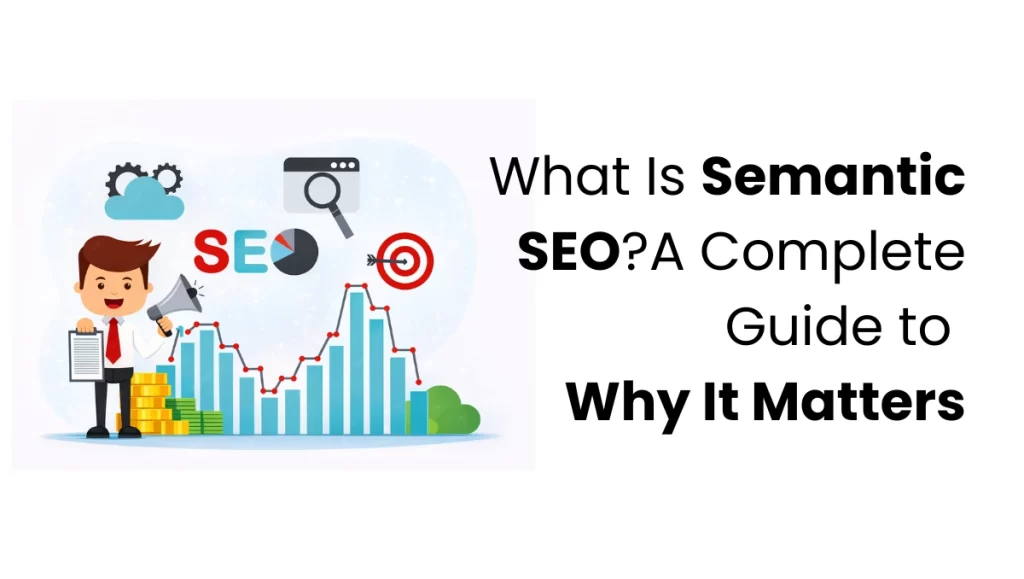
If you still think SEO is about finding a high-volume keyword and repeating it everywhere, you are optimized for 2015, not 2026. Search engines have changed. Google doesn’t just read your words anymore; it interprets your intent. This shift from “strings” (keywords) to “things” (entities) is what we call Semantic SEO.
For a digital marketing course to be truly effective today, it can’t just teach the basics of Meta Tags. It has to teach how to build a Knowledge Graph around a brand. This guide will break down exactly how to do that.
Why the Keyword Density Myth No Longer Works
For a decade, SEOs were obsessed with Keyword Density – the idea that mentioning your target phrase at a 2% ratio would trick the algorithm.
In 2026, Google’s NLP (Natural Language Processing) models, like MUM and Gemini, see right through this. They look for Contextual Relevance.
Example:
If you write a blog about “Apple,” how does Google know if you mean the fruit, the tech giant, or the record label?
Traditional SEO: You repeat “Apple iPhone” ten times.
Semantic SEO: You mention “iOS,” “Silicon Valley,” “Steve Jobs,” and “App Store.”
Google identifies these related entities. By surrounding your primary topic with these nodes of information, you prove to the search engine exactly what you are talking about without needing to stuff keywords.
Why Semantic SEO is Mandatory for 2026
Why should a business or a student looking for digital marketing training care about this? Because the Search Engine Results Page (SERP) has changed.
The Rise of Zero-Click Searches
With AI Overviews, Google often answers the user’s question directly on the search page. If your content isn’t semantically structured (using clear definitions and bullet points), the AI won’t cite you as a source. You lose the traffic.
Voice Search and Conversational Queries
People don’t type ‘ Digital marketing Kochi ‘ into their phones. They ask, “Hey Google, where can I find a practical digital marketing course in Kochi with placement?” Semantic SEO optimizes for these long-tail, natural-language questions.
Topical Authority Over Domain Authority
In the past, a big website could rank for anything just because it was old. Today, Google rewards Topical Authority. If your site provides a comprehensive cluster of related content on a subject, you can outrank even bigger competitors.
The Core Pillars of a Semantic Strategy
To hit a 1,500-word depth, we must look at the three technical pillars that make this work.
Pillar 1: Topic Clustering
Don’t write 20 random blogs. Write one Pillar Page (like this guide) and link it to several Cluster Content pieces.
Pillar: The Ultimate Guide to SEO.
Clusters: “How to use Schema Markup,” “A Guide to Voice Search,” “What is Latent Semantic Indexing?”
The Result: This internal linking structure tells Google, “We are the experts on the entire subject of SEO.”
Pillar 2: Intent Optimization
There are four types of user intent: Informational, Navigational, Commercial, and Transactional.
A common mistake in many digital marketing programs is teaching students to target High Volume keywords regardless of intent.
- Informational : If someone searches “What is SEO?”, they want a definition.
- Commercial : If they search “Best digital marketing course prices,” they are comparing options.
- Transactional : If they search “Enroll in digital marketing course in Kochi,” they are ready to take action .
Pillar 3: Structured Data
Think of Schema as a “translator.” You write in English for humans, but Schema translates your content into code that search engines can understand. By using Organization Schema or Course Schema for an institute like Finprov Learning, you are telling Google exactly who you are and what you offer in a language it can’t misunderstand.
How We Teach This at Finprov Learning
Most institutes still teach SEO using outdated approaches to keywords and backlinks. At Finprov, we go beyond the basics. Our program is built around modern SEO combining Technical SEO, Semantic SEO, and user intent to match how search engines actually work today.
Our digital marketing course in Kochi was redesigned to focus on Technical and Semantic SEO. We don’t just teach you how to write; we teach you how to:
- Analyze Entities: Using tools like Google’s Natural Language API to see how a bot understands your text.
- Build Topic Maps: Planning content calendars that cover every angle of a niche to build authority quickly.
- Human-Centric Copywriting: Writing in a way that satisfies both the “User” (Experience) and the “Bot” (Semantics).
How to Build a Semantic SEO Framework: A Step-by-Step Guide
If you are a student or a business owner in Kerala trying to rank, you need a repeatable process. Most digital marketing courses focus on tools like Yoast and Rank Math, without going deeper into the strategies behind them. That is not enough. To truly master Semantic SEO, follow this technical checklist.
Step 1: Entity Research (Beyond Keywords)
Before you start writing, identify the key entities that Google associates with your topic.
Tool Tip: Use the Google Natural Language API demo. Paste a top-ranking competitor’s URL into it.
What to look for: Note the “Entities” list. Pay attention to the “Salience Score,” which indicates how central a concept is to the topic.
Action: If you are writing about a digital marketing course in Kochi, your salience should be high for “Kochi,” “Digital Marketing,” “Professional Training,” and “career opportunities.”
Step 2 : Semantic Keyword & Context Mapping
Expand your entity list into related keywords, synonyms and contextually relevant phrases. Include secondary topics that support each entity.
Example : For “Digital Marketing”, related terms could include SEO training, social media marketing, Google Ads certification.
Step 3 : Topic Cluster & Content Structure
Group entities and keywords into logical clusters and subtopics. Create a hierarchical outline (H1–> H2 –>H3) reflecting these clusters.
Example:
- H1 = SEO Training in Kochi
- H2 = Course Details,
- H3 = Duration & Fees
Step 4: Semantic Content Creation
Write content naturally, integrating the entities and keywords without overstuffing. Include FAQs, examples, and internal links to related clusters. Use schema markup for courses, articles, and FAQs to strengthen semantic relevance.
Step 5: Monitor, Optimize & Expand
Track which entities and clusters perform best in search results. Fill gaps by adding missing information, updating FAQs, and expanding subtopics. Continuously refine internal linking to improve topical authority.
Schema Markup: The Translator for Search Engines
You cannot talk about Semantic SEO without talking about Structured Data. Think of your blog as a book. The text is for the reader, but the “Table of Contents” and “Index” are for the librarian (Google).
Essential Schema Types for 2026:
- Article Schema: Tells Google this is a long-form educational piece, not a news snippet or a product page.
- FAQ Schema: This is the “secret weapon” for ranking in 2026. By answering specific questions like “Where can I learn digital marketing in Kochi?” or “Does Finprov offer placement?”, you increase your chances of appearing in the “People Also Ask” boxes.
- Breadcrumb Schema: Helps Google understand the hierarchy of your site (e.g., Home > Courses > Digital Marketing).
The Old Way vs The Semantic Way
Earlier, SEO was simple.
The Old Way:
You write one page called “What is Semantic SEO” and repeat that phrase again and again, sometimes 40 or 50 times. This doesn’t work anymore. The page either stays stuck with no ranking or loses visibility.
The Semantic Way:
Now, things are different. Instead of focusing on a single page, you are creating content around the topic.
Pillar Page: Complete guide on Semantic SEO
Cluster 1: What is search intent in SEO?
Cluster 2: How to implement topic clusters in content strategy?
Cluster 3: On-page SEO techniques for ranking better
The Result:
Now, Google is aware that you are covering the topic in detail, not targeting a single keyword.
Because of that, it builds topical authority. So when someone searches for anything related to Semantic SEO, your content has a better chance of ranking compared to a page that only repeats one keyword.
Avoiding the AI Content Trap
Since 2024, Google has improved a lot at identifying content that looks long but doesn’t give real value.
To avoid that:
- Use real context: Give examples that people can actually relate to.
- Add practical details: For example, when talking about SEO careers, add opportunities or ways to learn instead of being general.
- Be specific, not vague: Saying “SEO is important” doesn’t add value. Instead, explain it clearly – SEO usually takes a few months before you start seeing consistent results.
- Keep language simple: Avoid dramatic lines. Write the way people actually speak or read. Simple and direct works better.
Conclusion: Your 2026 Action Plan
Semantic SEO is no longer optional. It’s the basic requirement now.
- Focus on topics instead of just keywords
- Build supporting content around your main pages
- Use structure to make content easy to understand
- Write for real people, not just search engines
If concepts like NLP, entities, and schema feel confusing, that’s normal. This is where proper training helps. A good digital marketing course can guide you step by step. At Finprov Learning, the focus is on practical learning so you understand how to apply these concepts in real work.
Quick content check:
Remove your main keyword and read the page again. If the topic is still clear, you’re on the right track. If not, you need to improve the content.
FAQs
What is Semantic SEO ?
Semantic SEO is the process of optimizing content based on meaning, context, and user intent instead of just repeating keywords. It focuses on related topics, entities, and structured content so search engines can clearly understand what your page is about.
How is Semantic SEO different from traditional SEO?
Traditional SEO focuses on keyword repetition and backlinks, while Semantic SEO focuses on context, intent, and topic coverage. Instead of targeting a single keyword, Semantic SEO builds a complete understanding of a subject using related terms and structured content.
Why is Semantic SEO important in 2026?
Semantic SEO is important because search engines now use AI models to understand user intent and context. With features like AI Overviews and voice search, only content that is well-structured and contextually relevant gets visibility and traffic.
What are entities in Semantic SEO?
Entities are specific concepts, topics, or terms that help search engines understand content better. Instead of relying only on keywords, search engines analyze related entities to identify context. For example, in a blog about a digital marketing course, entities like SEO, Google Ads, social media marketing, and analytics help clarify the exact focus of the topic.
How do I check if my content is semantically optimized?
Remove your main keyword and read the content again. If the topic is still clear and well-structured, your content is semantically optimized. You can also use tools like Google NLP API to analyze entity relevance.