Introduction
If your business relies on Google reviews to attract customers, recent changes to Google’s review policies are something you cannot ignore. Many practices businesses have used for years, such as offering rewards for reviews, filtering customer feedback before sending review links, or encouraging customers to mention staff members by name, may no longer be acceptable under the updated guidelines.
Customer reviews have a huge impact on how people discover and trust a business online. But Google is now placing greater focus on authenticity and cracking down on anything that appears misleading or manipulative. What may have once seemed like a simple strategy to increase reviews could now put your business profile at risk. In this article, we’ll look at what has changed, the practices businesses should avoid, and how to build a genuine review strategy that supports long-term growth.
What Changed in Google’s Review Policies in 2026?
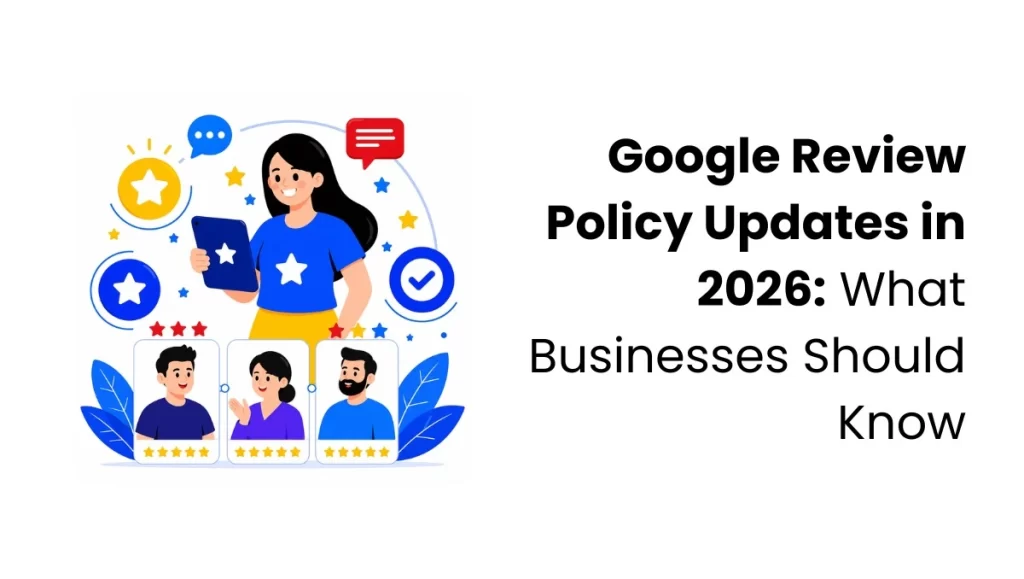
Google Review Guidelines 2026 are the latest rules introduced by Google for how reviews are written, managed, and displayed on Google Business Profiles (GBP). These updates aim to make online reviews more genuine and trustworthy for users.
Google aims to ensure that each review reflects a genuine customer experience. The number of fake, paid, and misleading reviews is growing. Therefore, Google has improved its systems to ensure users see genuine feedback rather than fabricated opinions.
To achieve this, Google uses advanced AI to identify suspicious activity and filter out content that appears fake or artificial. This helps businesses maintain proper ratings.
Google’s improved AI systems can now identify:
- Fake or paid reviews
- Unnatural or repetitive review patterns
- Reviews coming from multiple suspicious accounts
- AI-generated or scripted content
These improvements make Google Business Profiles more reliable and help users make better decisions based on genuine feedback.
Why This Update Matters?
Online reviews are important since they directly impact customers’ decisions when choosing a service. Whether someone is choosing a local service, a restaurant, or a digital marketing institute in Kerala, reviews often play a key role in building trust.
The latest Google review guidelines focus on:
- Show only real feedback from actual customers.
- Stop businesses from unfairly influencing ratings.
- Help users get clear, honest, and trustworthy information before they decide.
Overall, these updates help create a more transparent and fair digital review system where real experiences matter most.
Key Google Review Policy Updates in 2026
Let’s see some of the key changes under the Google Review Guidelines 2026.
Restrictions on Incentivised Reviews
Google can now identify suspicious review activity using improved AI-powered systems. The system can now detect reviews that appear connected to rewards or compensation, such as discounts, coupons, gift cards, refunds, loyalty points, or free products.
If a business offers discounts, rewards, or other benefits in exchange for positive reviews, it may violate Google’s guidelines. The same applies if it asks customers to edit or remove negative reviews in return for incentives. Google is becoming much stricter about these practices and may remove such reviews or place warning notices on the business profile. The best approach is to let customers share their honest experiences naturally, without influencing what they say.
However, businesses can still encourage customers to leave reviews naturally through follow-up emails, SMS messages, receipts, or QR codes, as long as there is no pressure or reward attached.
Limitations on Requesting Staff Name Mentions
Another major change focuses on how businesses influence review content. In the past, many businesses encouraged customers to mention specific employees in their reviews to recognise staff performance. Customers can still mention staff members naturally, but businesses should avoid directing customers on what details to include.
Review gating is also not allowed by Google. This is when a business checks customer feedback first and asks only happy customers to leave a public review, while unhappy customers are directed to a private feedback form. Google does not allow this because every customer should have the same chance to share their experience openly, whether it is positive or negative.
Google wants every customer to have an equal chance to share their experience publicly, regardless of whether the feedback is positive or negative. Reviews should reflect real opinions rather than selected or guided responses.
Stronger Verification Through Account and Location Signals
Google now uses additional signals to detect potentially suspicious or inauthentic reviews. Factors such as account activity, review history, device information, and behaviour patterns may be analysed before reviews become visible.
Location signals are also becoming more important. If someone leaves a detailed review for a business without any indication that they visited or interacted with that location, the review could be flagged, filtered, or hidden.
These extra checks help reduce the number of fake reviews and improve trust in Google Business Profiles.
Updated Guidelines for Business Responses
The new rules also apply to how businesses reply to customer reviews. Replies should be polite, simple, and focused on addressing what the customer actually said. It’s best to avoid sounding too promotional, stuffing keywords for SEO, or offering any kind of reward in response. Instead of promoting the business in replies, focus on having real, helpful conversations and building trust with customers over time.
Conclusion
Google’s 2026 Review Guidelines are intended to make online reviews more authentic and trustworthy. Google is now getting smarter by using stronger AI tools and stricter rules to ensure reviews reflect genuine customer experiences. Because of this, businesses should avoid practices such as offering rewards for reviews, filtering customers before asking for feedback, or telling customers what to write. These practices can now lead to penalties and may also affect how trustworthy a business looks online.
For businesses, these updates are a reminder to focus more on real customer relationships rather than quick tricks to improve ratings. Rather than just collecting positive reviews, businesses should focus on providing quality service and treating customers well. When businesses stay honest and follow fair review practices, they build more trust, a better reputation, and long-term customer relationships.
Digital platforms are constantly evolving, so marketers, entrepreneurs, and business owners need to stay up to date. Knowing these changes helps avoid mistakes and use the right strategies online. Taking a digital marketing course in Calicut is a practical way to learn current trends, understand platform rules, and apply simple, effective methods to grow a business online.
FAQs
1. What are Google Review Guidelines 2026?
They are Google’s updated guidelines for collecting and displaying reviews on Google Business Profiles. The main focus is simple. Reviews should come from real customer experiences, not fake or influenced ones.
2. Why did Google update these rules?
Google updated review rules to reduce fake and paid reviews. Some businesses were trying to boost their ratings in unfair ways, so Google tightened the rules to ensure reviews remain honest, real, and trustworthy.
3. What kinds of reviews are not allowed now?
Fake reviews, paid for, influenced by rewards, or written by employees are not allowed. Google can remove these automatically if they are detected.
4. Can businesses still ask customers for reviews?
Yes, they can. But they should not offer rewards or pressure to customers. It should be a simple request after a service or purchase.
5. What is review gating?
It’s when businesses only ask happy customers to leave reviews and ignore unhappy ones. Google does not allow this because every customer should get the same chance to share feedback.