Businesses have long invested in keyword research, backlinks, content marketing, and technical optimization to improve their visibility in search results and attract organic traffic. While these fundamentals still matter, the way people search for information is changing. Instead of typing short keywords into a search engine, users are increasingly asking complete questions to AI tools such as ChatGPT. Whether they want to learn a new skill, compare products, understand a concept, or solve a problem, many users now expect direct answers rather than a list of links.
This change has created a new area of interest in digital marketing known as AI SEO or Generative Engine Optimization (GEO). But what exactly does that mean? Can websites rank in ChatGPT? Do keywords still matter? And how can content creators adapt their SEO strategy for AI-powered search? To answer these questions, it’s important to understand how AI-powered search differs from traditional search and what factors influence visibility in AI-generated responses.
Understanding ChatGPT SEO
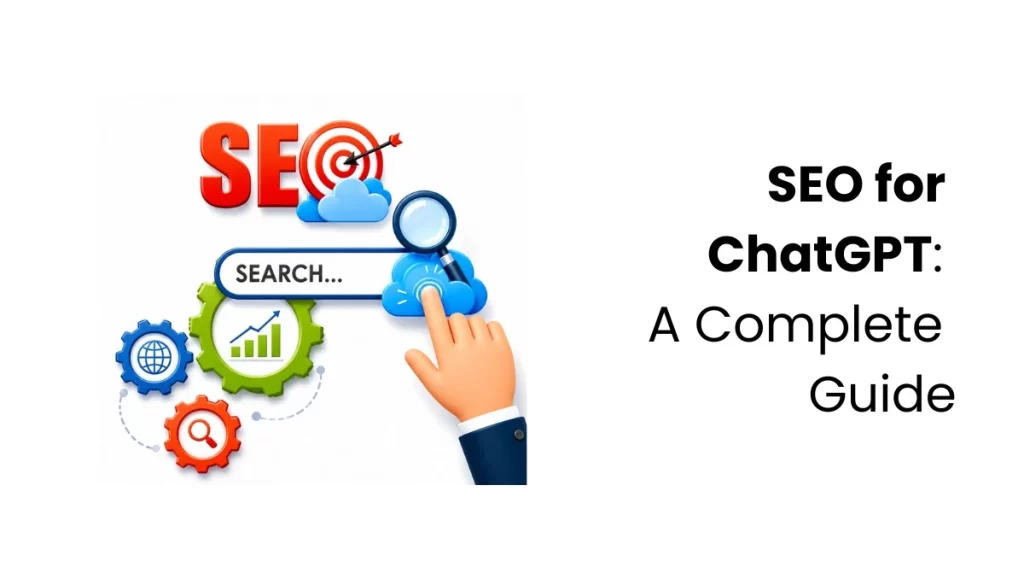
ChatGPT SEO refers to the practice of creating and structuring content so AI tools can easily understand, retrieve, and use it when generating responses. Unlike traditional SEO, the goal is not just higher rankings but becoming a trusted and reliable source of information. The difference becomes clear in how users search today. Instead of simple keywords like ‘digital marketing course’, users ask detailed, conversational questions such as:
- Which digital marketing skills are most in demand?
- What should beginners learn first in digital marketing?
- Where can I find hands-on digital marketing training in Kochi?
- Is digital marketing still a good career choice?
- What is the difference between SEO and PPC?
To answer these questions effectively, AI platforms look for content that provides clear explanations, accurate information, and strong topical relevance.
How ChatGPT Finds and Uses Information
One of the biggest misconceptions about AI search is that it works exactly like a traditional search engine. In reality, AI models are designed to understand meaning, context, and semantic relationships between topics. When evaluating content, AI-powered search tools generally favor information that is:
- Clearly written and direct
- Factually accurate and verifiable
- Well-structured with clean HTML tags
- Contextually relevant to the user’s specific intent
- Comprehensive enough to completely resolve a query
Consider the following examples:
Example 1 :
Our innovative digital ecosystem empowers future-ready professionals through transformational learning experiences.
Example 2 :
A professional digital marketing course typically covers SEO, content marketing, social media marketing, Google Ads, email marketing, and web analytics.
The second statement is significantly more effective because it communicates specific data points. Both readers and AI tools can quickly identify exactly what the content is about. This highlights an important principle of AI SEO: structural clarity always outperforms vague promotional language.
Why Traditional SEO Alone Is No Longer Enough
Traditional SEO remains essential because standard search engines still drive significant traffic, and factors like backlinks, user experience, and technical core vitals continue to influence overall visibility. However, strong Google rankings do not automatically translate into performance in AI-powered search. Many pages are optimized heavily for keyword density but fail to answer direct user questions, while others rely on generic, low-value content. AI systems lean toward educational, expert-driven content, making detailed guides and structured tutorials highly valuable in modern search strategies.
The Growing Importance of Generative Engine Optimization (GEO)
As AI-powered search tools become standard consumer behavior, marketers have shifted toward Generative Engine Optimization (GEO). GEO refers specifically to optimizing content for AI platforms that synthesize answers in real time rather than displaying a static list of external links. While the concept is relatively new, many GEO principles align with established SEO best practices. These include:
- Creating high-quality, original content
- Showcasing deep expertise in a niche
- Creating detailed content that builds topical authority
- Improving content scannability through semantic formatting
Ultimately, GEO is an extension of traditional SEO rather than a completely separate discipline. The core goal remains the same: proving your website’s authority to retrieval algorithms.
SEO vs GEO: What’s the Difference?
| Aspect | Traditional SEO | Generative Engine Optimization (GEO) |
| Primary Goal | Improve website rankings on search engine results pages (SERPs). | Increase visibility and mentions in AI-generated answers. |
| User Journey | Users search with keywords and click on website links. | Users receive direct answers generated by AI, often with source citations. |
| Main Focus | Keywords, website traffic, and search rankings. | Content relevance, context, and answer quality. |
| Optimization Factors | Technical SEO, backlinks, page speed, and domain authority. | Clear answers, structured content, entity optimization, and accurate information. |
| Success Metric | Higher rankings and more clicks from search results. | More citations, mentions, and visibility in AI-generated responses. |
The Role of Keywords in AI Search
Keyword research remains important because it identifies the primary pain points, topics, and search intent behind user queries. However, optimization today relies less on exact-match phrase repetition and more on answering full question clusters.
As search behavior becomes increasingly conversational, marketers should expand their focus from short phrases to the exact questions users put into LLMs. For example, instead of targeting only the short-tail keyword ‘ digital marketing training’, content should address the natural variations and long-tail intents built around it:
- How can beginners start learning digital marketing?
- What skills are required for a digital marketing career?
- Which digital marketing institute in Kochi offers practical, hands-on training?
- How long does it take to master digital marketing?
By addressing these highly specific, real-world queries directly within your content, you make it significantly easier for AI search engines to pull your paragraphs as the definitive answer.
The Growing Importance of Entities in AI Search
AI-powered search systems rely heavily on entities rather than strings of text. An entity refers to a person, company, product, service, location, or concept that can be uniquely identified and mapped.
For example, an AI system recognizes a specific digital marketing institute, a software application, or a physical city like Kochi as distinct entities and connects them across the web. To improve visibility, businesses must maintain accurate, uniform information across their website, local business profiles, and social channels. Consistent branding, explicit schema markup, and robust topical authority help AI systems map your identity and associate your brand with relevant search queries.
Why Trust and Expertise Matter More Than Ever
AI-powered search systems are designed to minimize inaccuracies and provide reliable answers. As a result, they give greater visibility to content that shows experience, expertise, authority, and trustworthiness.
Businesses can strengthen these signals by:
- Publishing accurate, deeply researched content
- Demonstrating firsthand industry experience
- Citing credible, authoritative data sources
- Keeping information strictly up to date
- Showcasing verified author credentials and organizational backgrounds
While E-E-A-T (Experience, Expertise, Authoritativeness, and Trustworthiness) originated as a Google quality framework, its core principles perfectly match what AI retrieval systems look for when selecting trustworthy content sources.
How to Optimize Your Website for AI Search
To make your content easier for AI tools like ChatGPT to find, understand, and use, you need to structure your website in a clear, scannable manner.
Step 1: Ensure AI Bots Can Access Your Site
Before AI systems can pull your content, they need permission to crawl it. Review your robots.txt file to ensure you aren’t accidentally blocking necessary user agents.
OpenAI utilizes distinct crawlers depending on the exact use case:
- OAI-SearchBot: Explicitly used for search-related indexing and real-time retrieval (ChatGPT Search).
- ChatGPT-User: Used for specific, user-initiated direct web browsing requests.
- GPTBot: Used for general web crawling to train underlying AI foundation models.
If your goal is to maximize visibility in real-time AI search while restricting your content from being used for base model training, you can configure your robots.txt to block GPTBot while allowing OAI-SearchBot.
Technical Note: A properly configured robots.txt file alone does not guarantee access. Ensure your firewall, Content Delivery Network (CDN), or security plugins are not blocking these bots at the server level, and that your site handles Javascript rendering cleanly. Also, ensure your website is fully indexed in major web search engines. Submitting your sitemap through Bing Webmaster Tools is highly recommended, as many AI engines pull directly from Bing’s index for live queries.
Step 2: Answer-First Content Structure for AI Search
If your primary answer is hidden deep within introductory paragraphs, it will likely be overlooked.
Use the Inverted Pyramid Style : Start with the main answer or conclusion first. Then add supporting details, data, and context.
Use Question-Based Headings : Use H2 or H3 headings that match the questions people naturally ask AI tools. Under each heading, provide a direct answer in the first sentence.
AI-Friendly Structure Example:
How can a business improve local search visibility?
Direct Answer: A business can improve local search visibility by optimizing its Google Business Profile, keeping business information consistent across local directories, and collecting genuine customer reviews.
Step 3: Make Content Easy to Scan
AI systems process well-structured content more effectively.
- Use bullet points for lists and step-by-step instructions.
- Use tables to compare information.
- Keep sentences short and clear.
- Remove unnecessary words and complicated language.
Step 4: Use Facts Instead of General Claims
AI search engines prefer measurable facts over promotional statements. Replace broad claims with specific data and results to make your content more credible.
Instead of writing: ‘ We provide lightning-fast customer support.’
Write: ‘ Our support team responds to customer queries in under 12 minutes on average.’
Common Misconceptions About SEO and GEO
SEO is dead and GEO has completely replaced it
This is incorrect. Traditional search engines and AI search platforms rely on the same web content. GEO builds on strong SEO practices rather than replacing them.
Publishing large amounts of AI-generated content will help you rank in ChatGPT
This is not true. AI search systems prioritize original insights, unique value, and expert knowledge. Publishing generic AI-generated content can reduce content quality and visibility.
ChatGPT automatically remembers my website from its training data
Not always. For current and specific information, AI tools often use live web data. Your website still needs to be accessible, indexed, and optimized.
AI search reduces clicks, so it has no business value
While AI answers may reduce some informational clicks, users who click cited sources often have stronger intent and are more likely to become customers.
Quick AI SEO Checklist
- Verify that OAI-SearchBot is allowed in your server settings and robots.txt file.
- Ensure your sitemap is indexed through Bing Webmaster Tools.
- Use headings that match natural user questions.
- Provide a direct answer immediately after each heading.
- Replace vague marketing claims with clear facts and data.
Conclusion
Instead of relying on exact-match keywords, success now comes from creating clear, accurate, and well-structured content that directly answers user questions. Websites that focus on clarity, relevance, and strong content structure are more likely to appear in both traditional search results and AI-generated responses.
To help marketers and businesses adapt to these changes, Finprov Learning includes Generative AI tools, prompt engineering, and modern GEO strategies in digital marketing programs. This practical approach helps learners build the skills needed to succeed in the future of search and content marketing.
FAQs
1. Can websites rank in ChatGPT?
ChatGPT does not rank websites in the same way search engines do. Instead, it references and cites content that is relevant, trustworthy, and useful. The goal is to create content that can be selected as a reliable source.
2. What is the difference between SEO, AEO, and GEO?
SEO (Search Engine Optimization): Improves website rankings in traditional search engines.
AEO (Answer Engine Optimization): Focuses on creating content that can appear in featured snippets, voice search, and direct answers.
GEO (Generative Engine Optimization): Focuses on making content easier for AI systems to understand, retrieve, and cite in generated responses.
3. Do keywords still matter in AI search?
Yes. Keywords still help identify user intent and topic relevance. However, AI systems also focus on context, meaning, and comprehensive coverage of a topic.
4. How can I optimize my website for AI search?
Create useful and trustworthy content, answer questions directly, use clear headings and structure, maintain consistent business information, and ensure your website is accessible to AI crawlers.
5. How can I track traffic coming from ChatGPT?
You can use analytics tools such as Google Analytics. Keep in mind that some AI-generated traffic may appear as direct traffic because referral information is not always passed. Monitor referral sources like chatgpt.com and look for traffic increases on specific content pages.