Introduction
Businesses today collect massive amounts of data from different sources. This data can come from websites, mobile applications, databases, APIs, customer transactions, social media, and other business systems. However, simply collecting data is not enough. Before businesses can use it for reporting, analysis, or decision-making, they need to collect, process, clean, and move the data to the right destination. This is where data pipelines become important.
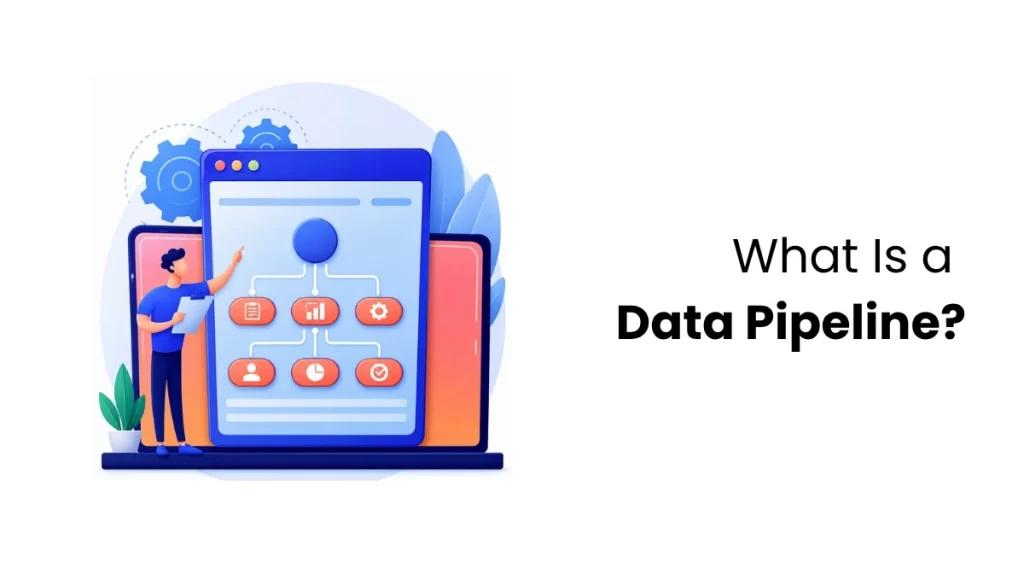
A data pipeline is a series of steps that moves data from one or more sources to a destination. During this process, the data may be filtered, cleaned, transformed, combined, or organised based on business requirements. Businesses can then store the processed data in a data warehouse or data lake, making it easier to access, analyse, and use when needed.
Data pipelines help businesses handle large volumes of data in an organised and efficient way. They also support business intelligence dashboards, data analytics, and machine learning applications. In this blog, we will cover what data pipelines are, how they work, their key components, different types, and why they matter for modern businesses.
Why Are Data Pipelines Important?
Businesses collect data from many different sources, such as CRM systems, websites, applications, databases, and sales platforms. When this data stays in separate systems, it can create data silos and make it hard for teams to get a complete picture of the business. For example, a company may store customer information in one system, sales data in another, and website activity in a third. Manually bringing all this data together can take a lot of time and may lead to errors.
This is where data pipelines become useful. They automatically collect data from different sources, process it, and move it to a central location where teams can easily access and analyse it. This helps businesses work with accurate and up-to-date information instead of relying on scattered data.
Data pipelines are important for several reasons:
Improved Data Quality
Raw data is not always clean or ready to use. It may contain duplicate records, missing information, errors, or different formats. Data pipelines help clean and organise this data before it reaches the people or tools that need it. They can standardise details such as dates, names, phone numbers, and currencies, making the data more consistent and easier to work with. This helps teams rely on the data when analysing information or making business decisions.
Faster Data Processing
Many data-related tasks are repetitive and time-consuming when done manually. Data pipelines automate these tasks, allowing data teams to process large amounts of information faster. This also helps businesses get useful insights without spending unnecessary time on manual data preparation.
Better Data Integration
Businesses usually use multiple tools and platforms to manage their operations. Data pipelines bring information from these different sources together. For example, they can combine customer, sales, and website data so businesses can get a more complete view of their customers and performance.
Support for Analytics and Business Intelligence
Data pipelines make it easier to move clean, organised data into analytics tools, dashboards, and business intelligence platforms. Teams can use this data to spot trends, understand performance, and make informed business decisions.
Support for AI and Machine Learning
AI and machine learning models need large amounts of clean and reliable data to work well. Data pipelines collect data from different sources, clean it, and prepare it for training and running these models.
Overall, data pipelines make it easier for businesses to manage and use their data. They bring data from different sources into one place, reduce manual work, and turn raw data into usable information. This makes it easier to create reports, analyse data, support AI applications, and make better day-to-day business decisions.
Types of Data Pipelines
Data pipelines can work in different ways depending on how quickly data needs to be processed and what the business needs to do with it. Some pipelines process data at regular intervals, while others handle data as soon as it is generated. The most common types include:
Batch Processing Pipeline
Batch processing pipelines collect data over time and process it together as a group. Instead of moving data immediately, the pipeline runs on a schedule, such as every hour, every day, or at month-end.
This type of pipeline works well when businesses do not need real-time information. For example, a company can use a batch pipeline to process payroll data, generate daily sales reports, or move large amounts of historical data into a data warehouse. Batch processing is also useful when handling large volumes of data efficiently.
Streaming Data Pipeline
Streaming pipelines process data continuously as it is generated. Rather than waiting for a large amount of data to build up, the pipeline handles each piece of information almost immediately.
This makes streaming pipelines useful when businesses need up-to-date information. For example, they can detect suspicious transactions, track inventory, monitor website activity, or power real-time dashboards. Streaming can provide faster insights, although it can be more complex to manage than batch processing.
Data Integration Pipeline
Data integration pipelines bring data from different sources together and prepare it for use. Businesses often use several systems for sales, customer management, finance, and operations. A data integration pipeline can collect information from these systems, clean it, transform it, and bring it together in a central location such as a data warehouse or data lake.
This helps reduce data silos and gives teams a more complete view of their business data.
Cloud Native Data Pipeline
Cloud native pipelines are designed to work with cloud platforms and services. They can collect, process, transform, and store data using cloud-based infrastructure.
These pipelines help businesses that deal with growing amounts of data because they can scale as data requirements increase. They also make it easier to connect different cloud services and analytics tools.
Common Challenges in Data Pipeline Management
Managing a data pipeline doesn’t end when it is built. As data grows and business needs change, pipelines can face different problems. Some of the common challenges include:
Maintaining Data Quality
When data comes from different sources, it may not always be accurate or properly organised. Data may be missing details, duplicated, or contain simple errors. If you don’t fix these problems, they can affect your reports and analysis. Data pipelines clean and organise data before it is used so that businesses can work with better, more reliable data.
Handling Large Volumes of Data
As businesses grow, the amount of data they handle also increases. A pipeline that works well with a small amount of data may slow down as data volume grows. Pipelines need to be designed to handle increasing data volumes without affecting performance.
Security and Compliance
Data pipelines often handle sensitive business and customer information, so keeping the data safe is essential. Businesses must ensure only authorised people can access the data. Using security measures such as access controls and encryption can help protect data from unauthorised access and keep the business compliant with relevant rules.
Monitoring Pipeline Performance
Data pipelines can sometimes slow down or stop working, and the problem may not be noticed immediately. Regular monitoring helps teams track pipeline performance and quickly spot issues such as failed processes, delays, or unexpected data changes. Alerts can also help teams fix problems before they affect other systems.
Use Cases of Data Pipelines
Businesses use data pipelines in many areas where they need to collect and work with large amounts of data. Some common use cases include:
Fraud Detection
Data pipelines can process transaction and customer activity data almost in real time. This helps businesses identify unusual patterns and quickly flag potentially fraudulent transactions.
Exploratory Data Analysis
Before analysing data, analysts need clean and well-organised datasets. Data pipelines collect, combine, and prepare data from different sources, making it easier for analysts to find patterns, identify problems, and discover useful insights.
Data Visualisation
Data visualisation presents data in an easy-to-understand way. Data pipelines provide clean, up-to-date data to tools used to create dashboards, charts, and reports. This helps teams quickly see what is happening, find trends, track performance, and understand the data without going through large amounts of raw information.
Machine Learning
Machine learning models need large amounts of quality data for training and making predictions. Data pipelines collect, clean, and prepare the required data before sending it to machine learning systems.
Data pipelines also help teams monitor data health and quality. They can check whether the data is up to date, accurate, and flowing as expected. If something goes wrong or the data suddenly changes, teams can spot the issue early and fix it before it affects reports, analysis, or day-to-day business operations.
Future of Data Pipelines
Data pipelines will keep changing as businesses collect more data and expect faster insights. In the future, data pipelines will become more automated, flexible, and easier to manage. Newer technologies are already reducing the manual work involved in building and maintaining pipelines.
Real-time data processing will also become more important. Businesses want to see and respond to changes as they happen, whether it is a customer purchase, a website visit, or a change in business performance. This means data pipelines must process information quickly without sacrificing accuracy.
Scalability will also become more important as data volume continues to grow. Data pipelines need to handle increasing amounts of information without slowing down or causing problems. Cloud technology and automation can help businesses manage this growth more easily and keep their data pipelines running smoothly.
Conclusion
Data pipelines make it easier for businesses to collect, organise, and use data from different sources. They reduce manual work and help teams get the right data for reporting, analytics, AI, and decision-making.
As data use continues to grow, understanding data pipelines can help anyone planning a career in analytics. If you want to build practical skills and learn how businesses use data, a business analytics course in Trivandrum can help you take the next step in your career.
FAQs
1. What is a data pipeline?
A data pipeline is a series of steps used to collect data from different sources, process it, and move it to a destination where it can be stored and analysed.
2. How does a data pipeline work?
A data pipeline takes data from different sources and moves it to the place where it needs to be used. Along the way, it cleans, organises, and transforms the data into the required format. It is then stored in a data warehouse, data lake, or another system where teams can easily access and analyse it.
3. What are the main types of data pipelines?
The main types include batch processing pipelines, streaming data pipelines, data integration pipelines, and cloud native pipelines. Each type depends on how the data needs to be processed and how quickly it is required.
4. Why are data pipelines important?
Data pipelines help businesses bring data from different sources into one place. They reduce manual work, keep data clean and organised, and make it easier for teams to use that data for reports, analysis, AI, and everyday business decisions.
5. What is a batch data pipeline?
A batch data pipeline processes data in groups at scheduled times. It is useful for tasks such as daily reports, payroll processing, and other activities that do not require real-time data.