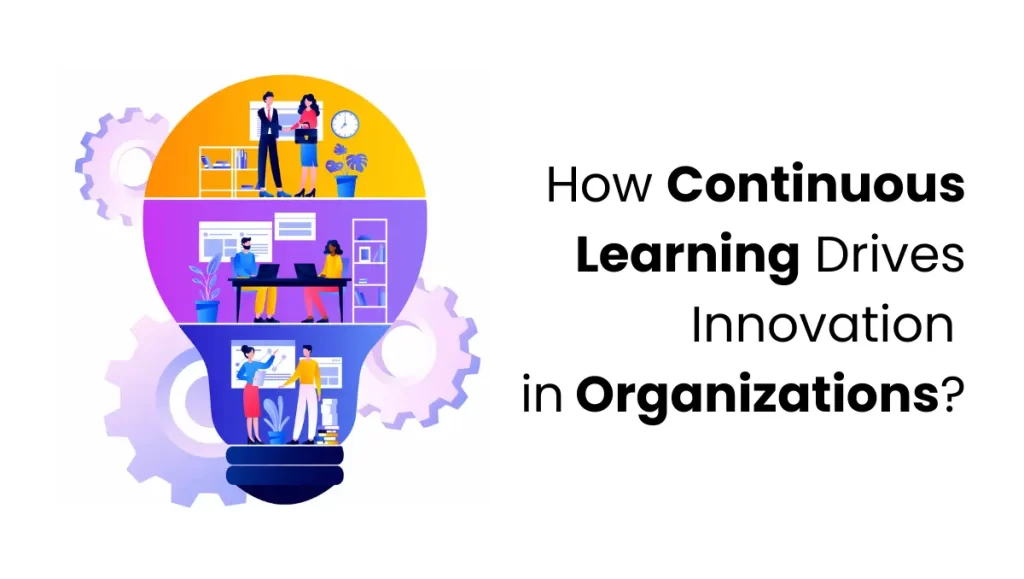
Most businesses treat employee training like a yearly check-box activity. You hire a speaker, the team sits in a conference room for four hours, and by Monday morning, everyone is back to doing things the exact same way they did ten years ago. This isn’t just a waste of money; it’s a missed opportunity to meaningfully transform how your company operates.
In a market where software, tax laws, customer expectations, and business models change quickly, knowing your job is no longer enough. Innovation usually does not happen because of a single brilliant idea. It happens when people have updated knowledge, better tools, and the confidence to solve problems in smarter ways.
The Real Link Between Learning and Innovation
When people hear the word innovation, they often imagine large technology companies building advanced products. But for most organizations, innovation is far more practical.
It may mean finding a faster way to close monthly accounts, a more accurate way to predict stock needs, a better way to handle customer queries, or a simpler workflow that saves time across departments.
Continuous learning supports this process. When employees stay updated on new tools, changing regulations, customer trends, and better systems, they begin to notice opportunities that were invisible before. You cannot rely only on 2015 knowledge to compete today.
Innovation also includes creating better customer experiences, launching new services, improving existing products, and finding new revenue opportunities. Learning helps teams identify and act on those opportunities faster.
Why Do Many Innovation Efforts Fail?
Many companies try to force innovation through brainstorming sessions. Unstructured brainstorming often fails when teams lack context, updated knowledge, or practical skills.
If your accounting team does not understand the full capabilities of an ERP system, they are unlikely to suggest ways to automate reporting. They continue using manual methods because that is what they are familiar with.
The real barrier to innovation is often a skill gap. When employees are stuck using outdated systems, they spend most of their time managing routine work. They have little time or energy left to improve how the business runs. Continuous learning removes this barrier by helping employees work smarter, faster, and with more confidence.
5 Ways Continuous Learning Changes the Way You Work
1. Reduces Fear of New Technology
Resistance to change is one of the biggest barriers to workplace innovation. Employees often push back against new systems because they fear mistakes or embarrassment.
Regular training builds confidence. When people understand a tool, they stop avoiding it and start using it effectively. That is when real improvement begins.
2. Improves Cross-Functional Problem Solving
Learning helps employees understand how other departments work. An operations manager who understands finance may identify a process change that saves the accounts team several hours each week. A customer support team that learns product workflows may solve issues faster. HR teams that understand analytics may improve hiring decisions.
This type of cross-functional awareness often creates simple but valuable internal innovation.
3. Helps Teams Respond Faster to Market Changes
Business conditions can shift quickly. Regulatory updates, tax changes, software upgrades, and changing customer needs require fast adaptation. Companies that wait until change becomes urgent often struggle. Companies with a strong learning culture are usually better prepared. They train early, adapt faster, and maintain momentum while others catch up.
4. Improves Employee Retention
High turnover damages progress. When experienced employees leave, they take knowledge, context, and workflow experience with them. People are more likely to stay in organizations where they continue to grow. Training and employee upskilling show that the company values long-term development. Retention matters because experienced teams are often best placed to improve systems and mentor others.
5. Leads to Better Decisions Through Better Data
Innovation depends on clear information. If teams rely on outdated spreadsheets or weak reporting systems, decisions are slower and more error-prone. Training employees in analytics tools, dashboards, or modern software can improve visibility and decision-making.
Better data usually leads to better action.
Moving Beyond One-Time Training
The old model of one annual seminar is no longer enough. To build continuous learning in the workplace, learning must become a regular part of how people work. This does not mean spending hours in classrooms every week.
It means using practical formats such as:
- Micro-learning: Short updates on tools, laws, or industry changes
- On-the-job learning: Applying new skills to live projects
- Peer learning: Team members sharing useful shortcuts or methods
- Monthly workshops: Focused sessions on current business needs
- Role-based learning paths: Training matched to specific job functions
Consistent learning creates stronger habits than occasional events.
Why Some Companies Struggle to Build Learning Internally?
Many businesses know training matters, but still fail to build an effective system.
Common reasons include:
- Lack of internal trainers with current expertise
- Limited time to plan programs
- Generic sessions with low relevance
- Inconsistent delivery across teams
- No way to measure impact
- Learning is treated as a low priority during busy periods
This is why many organizations choose external corporate training partners.
What is the Role of Corporate Training Companies?
Corporate Training companies help companies to improve the skills of their employees so that they can perform better at work. They focus on providing practical, job-related training that aligns with current industry needs. In this area, Finprov Learning provides effective corporate training programs designed to support employees in the organizations. When employees understand what they’re doing, they make fewer mistakes, work faster, and improve the quality of their work. They also start sharing better ideas. All of this serves as the foundation for sustained, long-term innovation in a company.
Measuring the Return on Investment (ROI)
Innovation can be challenging to measure, but learning outcomes can be tracked clearly.
Organizations can review:
- Time saved each month through automation
- Reduction in manual errors or rework
- Faster onboarding of new hires
- Higher employee retention
- Fewer compliance issues
- Faster project completion
- Better customer response times
- Increased team productivity
Many companies also report noticeable gains in efficiency after role-based training programs. If training is not measured, it often becomes easy to ignore.
Real Examples Across Industries
Continuous learning supports innovation in every sector.
Healthcare: Staff trained in digital systems can reduce paperwork and improve patient flow
Retail: Teams trained in customer behavior data can improve stock planning and sales strategies
Manufacturing: Workers trained in lean processes can reduce waste and downtime
HR: Teams using analytics can improve hiring quality and retention
Customer Support: Staff trained in CRM tools can resolve issues faster and improve satisfaction
Finance: Teams trained in automation can shorten reporting cycles and improve accuracy
Innovation is not limited to one department or industry.
Conclusion
Innovation is not something a company can simply hire as a department. It is the result of having employees who know more today than they knew yesterday. If teams continue using the same methods year after year, the business does not stay still. It slowly falls behind. Continuous learning helps organizations improve systems, respond faster, retain talent, and find better ways to serve customers. Investing in employee training is not an extra benefit. It is a practical business strategy for growth, resilience, and long-term competitiveness.
FAQs
How does continuous learning drive innovation in organizations?
Continuous learning gives employees updated skills, stronger confidence, and better awareness of new tools or methods. This helps them solve problems faster, improve workflows, and identify new business opportunities.
What is a learning culture in organizations?
A learning culture is a workplace where employee development is part of regular operations. The company supports training, skill-building, knowledge sharing, and continuous improvement across teams.
Why is corporate training important for business growth?
Corporate training improves productivity, reduces skill gaps, supports faster adaptation to change, and helps employees perform at a higher level. This can lead to stronger growth and better competitiveness.
What are the benefits of employee upskilling?
Employee upskilling can improve retention, efficiency, confidence, collaboration, and readiness for new technology. It also helps organizations build internal talent for future roles.