Introduction
Data has become one of the most valuable assets for businesses today. Every customer interaction, transaction, and business process generates information that can help organisations make smarter decisions. But with the sheer volume of data growing every day, finding meaningful insights quickly has become a major challenge.
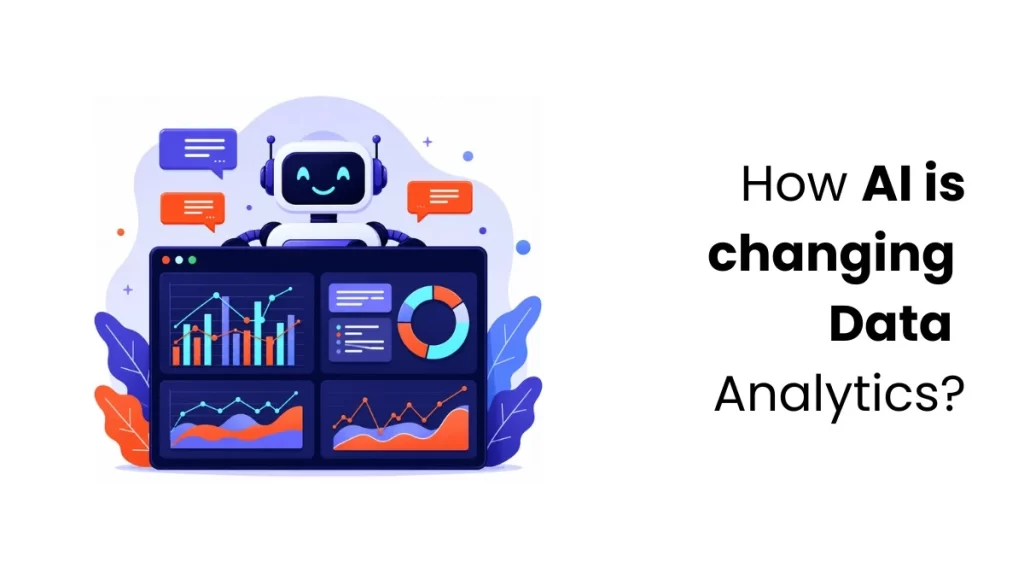
This is where Artificial Intelligence (AI) is transforming data analytics. Instead of spending hours manually collecting, cleaning, and analysing data, businesses can now use AI to automate repetitive tasks, uncover hidden patterns, and generate insights in minutes. AI is making data analytics faster, more accurate, and available to everyone, not just data experts.
In this blog, we’ll explore how AI is reshaping data analytics, the benefits it offers, and why it is becoming an essential skill for businesses and professionals alike.
AI in Data Analytics
AI in data analytics is the use of artificial intelligence to collect, process, analyse, and interpret data more efficiently and accurately than traditional methods. It helps businesses discover useful insights, predict future trends, and make better decisions.
One of the biggest advantages of AI is that it makes data easy for everyone to understand and use. You don’t need technical skills or complex tools to find the information you’re looking for. Instead, you can simply ask a question in plain language. For example, a business owner can ask, “Which product sold the most this month?” or “Which city has the most customers?” AI quickly checks the data and gives a clear answer in just a few seconds. This gives businesses faster access to the information they need.
Some of the key ways AI improves data analytics include:
- Finding hidden patterns: AI can detect trends and relationships in large datasets that might be difficult for humans to notice.
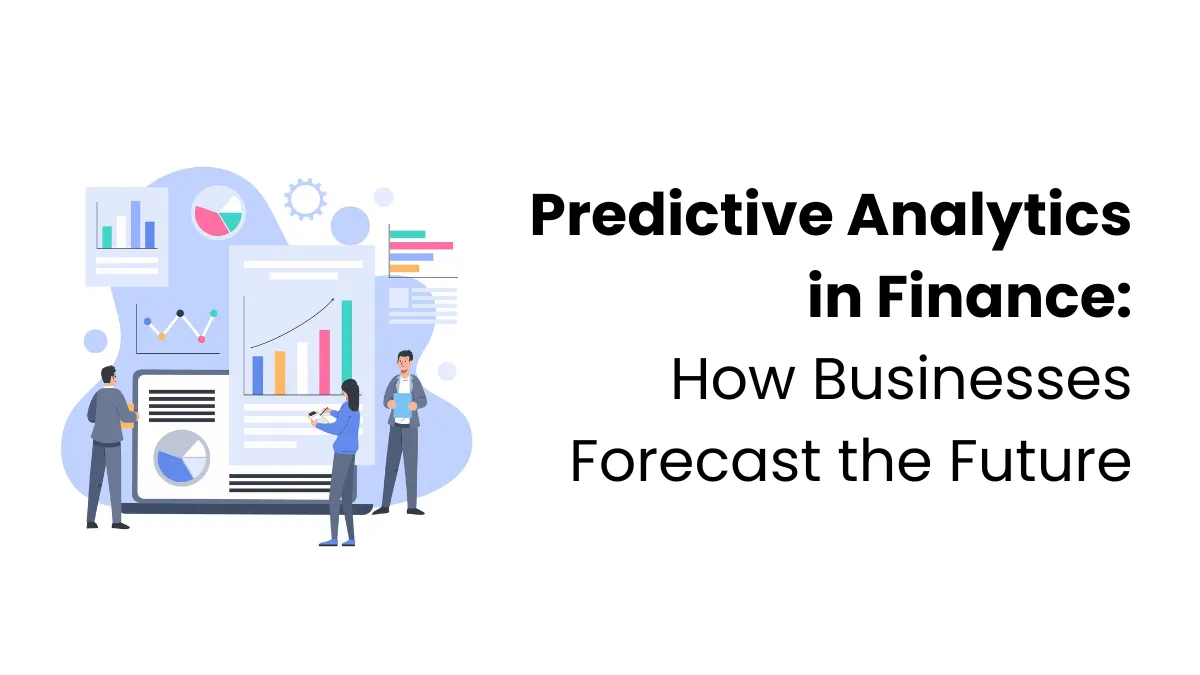
- Predicting future outcomes: By analysing historical data, AI can forecast sales, customer behaviour, market trends, and more.
- Automating repetitive tasks: It can clean data, remove errors, prepare business data, and generate reports automatically.
- Providing instant insights: AI quickly answers business questions and delivers recommendations without the need for lengthy manual analysis.
For example, imagine an online shopping company analysing customer purchases and browsing habits. AI may discover that customers who browse fitness products in the evening are more likely to buy health supplements within the next two days. Using this insight, the company can send personalised offers at the right time, increasing sales and improving the customer experience.
AI is not here to replace data analysts. Instead, it helps them work faster and more efficiently by handling repetitive tasks and providing useful insights. While AI processes the data, analysts can focus on understanding the results and solving business challenges. Rather than replacing human expertise, AI acts as a powerful tool that delivers greater value to organisations.
Benefits of Using AI for Data Analytics
The growing volume of business data has made traditional analysis more challenging. AI helps organisations interpret this information more effectively by identifying trends, generating valuable insights, and supporting data-driven decision-making across different business functions. Here are some of the main benefits of using AI in data analytics.
Saves Time and Reduces Manual Work
Handling large amounts of data is not easy and often takes a lot of time. Analysts usually spend hours preparing data and creating reports before they can start finding useful insights. AI helps by automating these routine tasks, allowing analysts to spend more time understanding the data.
Helps Find More Accurate Insights
Sometimes, important patterns in data can be difficult to notice manually. AI can analyse large amounts of information quickly and identify trends, connections, and opportunities that might otherwise go unnoticed.
Makes Handling Large Data Easier
As businesses grow, the amount of data they collect also increases. Managing such a large volume of information can become challenging. AI tools can quickly process multiple data sources and help businesses find the information they need without spending too much time on manual analysis.
Supports Better Decision-Making
AI allows businesses to understand what their data is telling them. It analyses customer behaviour, sales, and business operations to reveal meaningful insights.
Creates More Personalised Experiences
AI helps businesses better understand their customers. Understanding what customers like and how they shop helps companies offer the right products, send useful offers, and create a more personal experience. As a result, customers feel more valued and are more likely to stay loyal to the business.
Helps Predict Future Trends
One of the valuable features of AI is its power to help businesses plan. It learns from past data to identify trends, predict future outcomes, and detect possible risks early.
How to Use AI for Data Analytics?
AI can support every stage of the data analysis process, from data collection to identifying opportunities for business growth. It helps businesses save time, improve accuracy, and find valuable insights more easily. Here’s how you can use AI for data analysis.
Set Clear Goals
Decide what you want to achieve with your data. For example, you can increase sales, understand customer behaviour, reduce costs, or improve business performance. Having a clear goal helps AI focus on finding the most relevant insights.
Collect and Prepare Your Data
The quality of your results relies on the quality of your data. Gather data from different sources, such as websites, customer databases, sales records, or business applications. Before analysis, make sure the data is clean and organised. AI can help remove duplicate records, identify errors, and fill in missing information, making the data more reliable.
Analyse Data and Find Patterns
When the data is ready, AI can quickly analyse it and identify patterns that may be difficult to spot manually. It can discover trends, understand customer behaviour, and identify relationships across different datasets. These insights help businesses understand what’s happening and why.
Ask Questions in Simple Language
Instead of writing complex SQL queries, you can ask questions in simple language. AI understands the question and provides answers within seconds.
Present Insights with Visual Reports
AI can turn complex data into easy-to-understand charts, graphs, and dashboards. These visual reports make it easier for teams to understand the findings, track business performance, and share insights across the organisation.
Predict Future Trends
AI doesn’t just explain what has already happened. It can also analyse past data to predict future sales, customer demand, market trends, and possible risks.
Keep Improving Your Analysis
Business data changes over time, so AI models should be updated regularly. By monitoring performance and using new data, businesses can keep their insights accurate and relevant as conditions change.
Turn Insights into Better Decisions
The final step is to use the insights to take action. AI provides the information businesses need, but people still make the final decisions. By combining AI insights with human experience, organisations can solve problems faster, improve business strategies, and achieve better results.
Conclusion
AI is transforming the way businesses use data. It automates repetitive tasks, helps identify key trends, and predicts what might happen next, making data analysis faster and more efficient. If you’re ready to build these in-demand skills, enrolling in one of the best data analytics courses in Kochi can be a great place to start. With hands-on training, real-world projects, and industry-relevant tools, you can learn how to use AI in data analytics and prepare for a successful career in today’s data-driven world.
FAQs
1. How is AI changing data analytics?
AI is making data analytics simpler and more efficient. It handles repetitive tasks such as data cleaning and report preparation, uncovers patterns that might otherwise go unnoticed, and helps businesses predict future trends. This makes it easier to understand data and make better decisions.
2. Can AI replace data analysts?
No. AI supports data analysts, not replaces them. It automates repetitive tasks, allowing analysts to focus on interpreting insights, solving problems, and making strategic decisions.
3. How does AI help businesses make better decisions?
AI helps businesses make smarter choices by analysing data, finding useful patterns, and showing what needs attention. This helps companies better understand customers, improve their work, and plan for the future.
4. Do I need programming skills to use AI in data analytics?
No. You don’t always need programming skills to use AI in data analytics. Many AI tools let you ask questions in plain language and provide answers instantly. However, knowing programming can be an advantage for more advanced tasks.
5. What industries use AI in data analytics?
AI is being used across industries such as healthcare, finance, retail, manufacturing, e-commerce, marketing, education, and logistics. It helps organisations automate tasks, improve customer experiences, identify valuable insights, and make smarter decisions using data.