In every business, accounting or bookkeeping is a difficult task. Even if it is difficult, it can help to provide proper budget management and help in financial control. The evolution of new technology has helped to revolutionize daily activities in accounting. Cloud technology has a vital role in changing how companies manage and operate their businesses. By adapting this technology, you can take the full benefit of accounting. In this blog, we will explore everything you should know about the cloud-based accounting software.
What is Cloud Accounting Software?
For every business, recording of the income and expenditure helps to keep track of the financial performance. Accounting softwares and bookkeeping have been around for decades, which are used for recording and keeping track of the money that is coming in and going out of the company. Most accounting software was desktop-based instead of cloud-based, and it had many disadvantages, such as limited data access, a need for frequent updates, and continuous payment for backing up the data.
How Cloud Accounting Works?
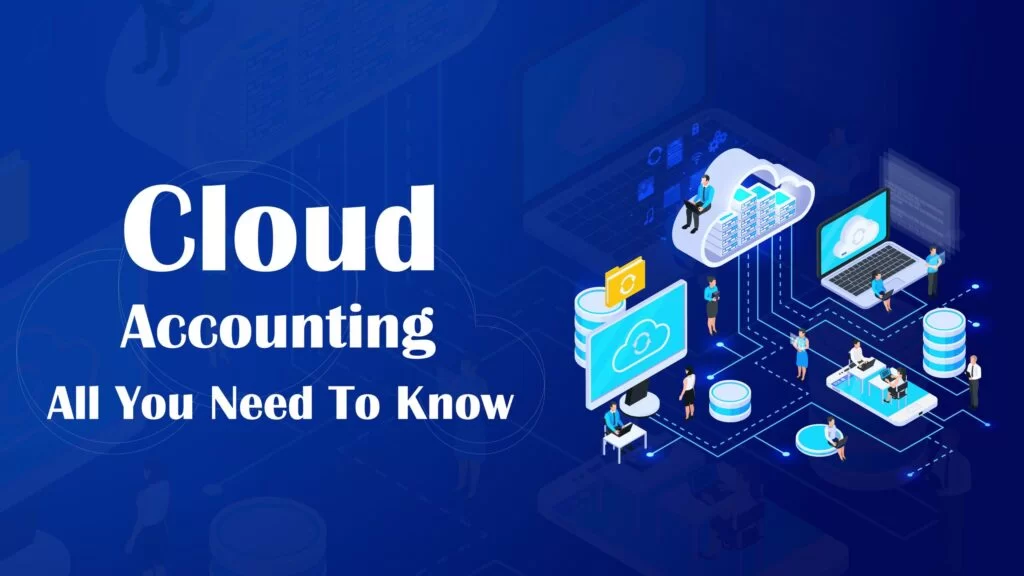
Cloud accounting includes all the functions of desktop accounting, but all the accounting activities of a business are done using the internet, and then it is moved into the cloud. This includes all the gathering, storing, accessing, and processing of all the documents, such as invoices, purchase orders, and account statements, as electronic documents. Cloud accounting is implemented by using different cloud accounting software, which has brought a big transformation in the field of accounting.
Features of Cloud-based Accounting Software
- Automated invoicing and billing
- Expense tracking and categorization
- Real-time financial reporting
- Bank integration and reconciliation
- Multiple users can access and collaborate
- Data security
- Automatic backups
- Integration with other business softwares
Advantages Of Cloud based Accounting Softwares
There are a large number of benefits, including:
Access Anywhere
One of the main benefits is that you can access the cloud-based accounting software to view the financial records from anywhere at any time. You will be able to work remotely. Also, the permission-based sharing with the remote access allows you to share documents with anyone.
Real-Time Information Accessibility
Another important advantage of using the online accounting software is its ability to process and analyze real-time data. So instead of checking the historical records, you use the real-time overview for tracking the recent data, staying updated, and getting live feedback. This overview is important for assessing the cash position, planning future expenditures, and making important financial and strategic decisions as a management team.
Secure and Safe Data Sharing
With accounting software, you can easily get access to your account while working with your accountant, bank, or other advisers. With cloud accounting, you will get the security of the cloud, no downtime, multi-level access, and the latest version of the softwares. Also, there is no need to protect the hardware as the data is stored in the cloud.
Always working with the newest software version
When you are logged in to the cloud platform, you are always using the latest version. There is no need to waste time on long and expensive updates; you can just log in and get to work.
Scalability and Efficiency
As the business grows, both the transactions and books can also grow. So you have to step up your accounting game. Using the online accounting software, you don’t have to worry about the memory constraints, as you can scale and customize your accounting software based on your needs. You can also use third-party apps for forecasting, invoicing, and industry-specific apps inside your accounting software.
Another benefit of using accounting software in the cloud is that it can help to save time and money. It can also use automation for reducing workloads and improving performance at a lower cost.
The Road Ahead: Cloud Accounting Software
As many businesses are opting for cloud solutions in accounting, there is a big chance that cloud accounting is revolutionizing accounting work. Some of the popular accounting softwares are Xero, QuickBooks Online, Sage 50 Cloud or Sage 200 Cloud, KashFlow, Zoho Books, etc. Using cloud accounting, you can get a quick overview of the accounts instead of the record history. It can help to get insights and make decisions.
By using the cloud account, you can reduce the time for doing administrative tasks such as data entry, finding documents, etc. Also, you can spend more time working on tasks like strategizing, decision-making, revenue generation, and growing your business. Cloud accounting is the future of accounting, and the faster you adapt to it, the more it can benefit your business growth.
FAQs
Q1. Is my financial data safe in the cloud?
Yes, your financial data is safe in the cloud if you choose from reputable providers that provide strong encryption like AES-256, include multi-factor authentication, and perform security audits on a regular time interval.
Q2. What are the advantages of cloud-based accounting software?
With online accounting software, multiple users can work on the same data simultaneously from different locations and automatically sync with your bank feeds, reducing manual data entry and human error. Also, you can check your financial health on your phone rather than on a desktop in the office. Everything is encrypted and stored on secure remote servers.
Q3. Which are the most used cloud-based softwares in accounting?
Some of the most used online accounting software includes QuickBooks Online, Xero, FreshBooks, Sage Business Cloud, and Zoho Books.
Q4. How is the cloud-based software different from traditional software?
Cloud-based accounting software is hosted on remote and third-party servers, which can be accessed using the internet. They also provide flexible subscriptions and automatic updates. On the other hand, traditional softwares is installed on premises, requires licensing, and requires in-house maintenance.
Q5. Do I need a constant internet connection to use cloud accounting software?
Yes, you need an internet connection for most of the tasks to store your data on the remote servers. Generally, you need an internet connection to log in, view your real-time balance, or sync with your bank account.