What role does efficient and reliable payroll processing play in the overall success of an organisation? It shows employees that their time and efforts are valued and greatly influences their trust and engagement at work, often more than other benefits or incentives. In addition, accurate and timely salary payments help organisations meet compliance requirements while saving time and reducing costs. Given the importance of payroll processing, ensuring it is handled correctly every time is essential. So, how can you ensure accurate and reliable payroll processing consistently?
What is Payroll Processing?
Payroll processing is a crucial procedure employed to reimburse employees for their work. It encompasses various tasks, including calculating wages, deducting taxes and benefit premiums, and disbursing payments, often through direct deposit.
Why is Payroll processing important?
Payroll processing is important because employees need to receive their salaries correctly and on time. When employees are paid without delays, they feel happy, valued, and motivated to do their work well. On-time salary payments also help build trust between employees and the organisation.
A good payroll system helps employees feel confident about the organisation. If salaries are delayed or paid incorrectly, employees may become worried and less interested in their work. Regular and accurate payments help create a positive work environment.
Payroll processing also helps organisations follow tax rules and employment laws. By managing payroll properly, businesses can avoid penalties, reduce errors, and maintain good relationships with their employees.
Types of Payroll Processing
Payroll processes encompass various payment types, including hourly, salary, and commission-based compensations. The proper category of employees under the Fair Labour Standards Act is crucial for determining eligibility for overtime pay, breaks, and other employment benefits. The wage types and entitlements are as follows:
- Hourly: Paid based on hours worked, eligible for overtime pay (non-exempt).
- Salary: Monthly or annual salary payment, eligibility for overtime pay varies (non-exempt and exempt).
- Commission: Straight commission or commission with a base salary; eligibility for overtime pay varies (non-exempt and exempt).
Organisations also need to decide how employees will receive their salaries. Payments can be made through bank transfers, paper checks, or other approved methods. Choosing the right payment method helps make payroll processing smooth and convenient.
Many organisations use payroll software to manage payroll activities. Payroll software helps calculate salaries, maintain records, and reduce mistakes. It also saves time and makes the payroll process easier and more accurate.
Essential Requirements for Processing Payroll
To process payroll effectively, several key steps need to be followed. Firstly, obtaining a federal employer identification number (FEIN), a state tax identification number, and potentially a local identification number for your business is necessary. These identifiers enable you to fulfil payroll tax obligations by filing and making tax payments.
The next crucial step is collecting and maintaining essential employee information and documents. This includes their Social Security Number, completed Form W-4 for federal income taxes, Form I-9 for employment eligibility verification, and a state withholding form for state income taxes (if applicable). Additionally, bank account details and benefits elections, such as insurance and retirement selections, should be recorded.
Timeframe for Payroll Processing
The time needed for payroll processing can vary from one organisation to another. It depends on the payroll method used and the number of employees in the organisation. Businesses that use payroll software can usually complete the payroll process within one or two days.
After payroll is sent to the bank, it may take another two or three days for the salary to reach employee bank accounts. In most cases, employees receive their salary within a few days after the payroll process is completed.
Payroll Cycle
Determining the frequency of payroll is an important decision that affects how often employees receive their pay. There are several common payroll cycles available, each with its own number of paychecks per year and suitability for different types of employees:
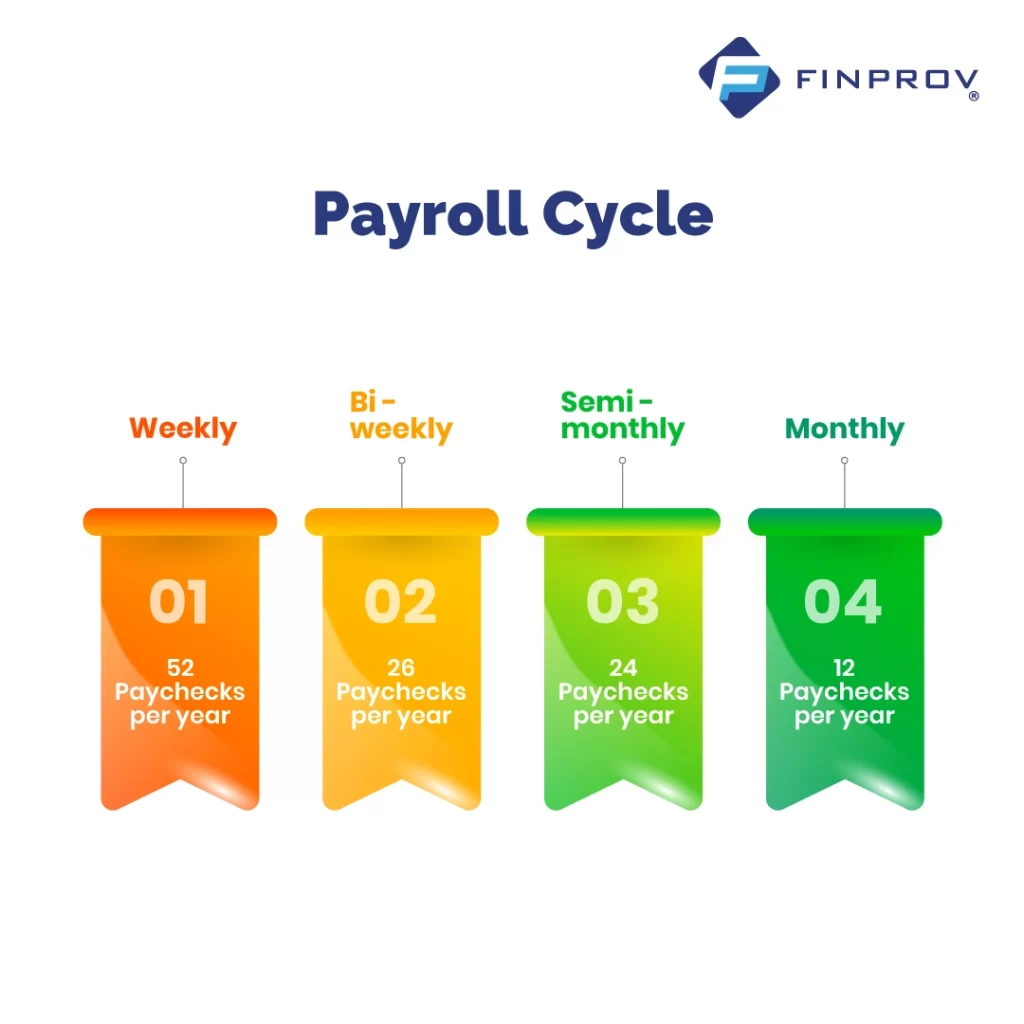
- Weekly: This cycle involves 52 paychecks per year and is commonly used for hourly employees who are paid hourly.
- Bi-weekly: With 26 paychecks per year, this cycle suits hourly and salaried employees.
- Semi-monthly: This cycle offers 24 paychecks per year and is typically utilised for salaried employees.
- Monthly: As the name suggests, employees are paid once a month, resulting in 12 paychecks per year. This cycle is commonly used for salaried employees.
Steps in Payroll Processing
Payroll processing is necessary for every company, regardless of size. It involves several essential steps that remain consistent across small or large organisations.
Once you have acquired your federal and state ID numbers, established a payroll cycle, determined wage classifications and requirements, and gathered all necessary employee information, you are prepared to initiate your initial payroll run.
Track Time & Attendance
To accurately calculate employee pay, tracking their working hours during the pay cycle is crucial. Many organisations utilise time and attendance software, especially if they have complex pay practices like shift differentials, overtime, or weekend pay. Even for simpler pay structures, a reliable time-tracking solution simplifies the process for employees to log and review their hours worked.
Approving Timecards
A compliant payroll process involves supervisors reviewing and approving timecards before processing payroll. Each employee’s timecard should be carefully reviewed, and necessary corrections should be made before issuing paychecks. Additionally, the supervisor’s approval should be documented and retained for future audits.
Calculate Wages and Deductions
Once an employee’s timecard is approved, their gross earnings are calculated. This calculation varies based on the wage type. For hourly employees, gross pay is determined by multiplying the hours worked by the pay rate. For salaried employees, gross pay is obtained by dividing the annual salary by the number of paychecks in a year. After calculating gross pay, deductions and withholdings such as taxes, benefits premiums, and garnishments are subtracted to determine the employee’s net pay.
Submit or Disburse Payroll
For employees with direct deposit, the finalised payroll is submitted to the organisation’s banking agent for disbursement. Alternatively, printed checks with pay stubs are ordered and manually distributed for employees receiving paper checks. Many employers use a combination of these methods, and some payroll providers offer additional options like on-demand pay for quicker access to earned wages.
Pay Taxes
After processing payroll, filing and remitting payments for state and federal payroll taxes, and any income taxes withheld from employees, it is necessary. Timely deposits are crucial to avoid penalties, so keeping track of key deadlines is important. Typically, the IRS requires payroll tax deposits to be made electronically through the Department of the Treasury’s Electronic Federal Tax Payment System (EFTPS).
Common Payroll Processing Challenges
Payroll processing can sometimes be challenging. Even small mistakes can create problems for employees and employers.
Some common payroll challenges include:
- Wrong employee details
- Missing attendance records
- Salary calculation mistakes
- Missing payroll deadlines
- Changes in tax rules
- Managing employees in different locations
Regular reviews and accurate recordkeeping can help reduce these issues.
Payroll Compliance and Record Management
Payroll compliance means following the rules when paying employees. This includes paying the right salary, deducting the correct tax, and following company and government rules. Companies should also keep payroll records safe and up to date. These records help answer employee questions and make audits and inspections easier.
Preparing for a Payroll Audit
A payroll audit is a review of payroll records to check whether employee payments and deductions are accurate. Organisations should regularly review payroll information to make sure everything is correct and up to date. Regular checks help identify errors early and support better payroll management throughout the year.
Key Payroll Reports Every Organisation Should Maintain
Payroll reports help organisations understand salary expenses and employee payments.
Some important payroll reports include:
Salary Register Report
Shows salary details for all employees during a payroll period.
Tax Deduction Report
Displays tax amounts deducted from employee salaries.
Attendance Report
Shows employee attendance and working hours.
Overtime Report
Tracks extra hours worked by employees.
Reimbursement Report
Records payments made to employees for approved business expenses.
These reports help organisations maintain accurate payroll records and support better decision-making.
Best Practices for Accurate Payroll Processing
Organisations can improve payroll accuracy by following a few simple practices.
- Keep employee information updated.
- Review attendance records regularly.
- Follow a fixed payroll schedule.
- Check payroll details before making payments.
- Keep payroll records safe and updated.
- Stay updated with tax and labour laws.
- Review payroll regularly.
Following these practices helps reduce errors and improve payroll efficiency.
Consequences of Delaying Payroll
Employers must disburse their workers promptly according to their designated payroll schedule. Federal law requires employers to compensate employees “promptly” for hours worked, while state laws often provide more specific guidelines. Delaying payroll processing can have serious consequences, including potential fines and penalties. It is crucial to ensure compliance with applicable laws and regulations regarding payroll frequencies, such as weekly, bi-weekly, semi-monthly, or monthly, in all the states where your workers are located.
Joining the Payroll Processing course allows one to know more details. Finprov offers accounting courses, including Certification in HR Payroll Process, to all learners with practical training. The course covers ESI working, PF, Gratuity working and payments, Payroll process, Overtime calculation, Income tax related to the payroll process, Claim and Reimbursement management and more. We also provide 24/7 mentorship support, allowing learners to clarify their doubts anytime and anywhere. Our personalized assistance ensures a smooth learning experience and facilitates a comprehensive understanding of the course material. Our ed-tech platform offers the best accounting and finance training courses, including online certification courses, primarily focusing on elevating accounting proficiency and starting a successful career.
FAQs
1. What is payroll processing?
Payroll processing is the process of paying employees for the work they do. It includes calculating salaries, making necessary deductions, and sending payments to employees on the correct date. Payroll processing also helps keep employee payment records organised.
2. Why is payroll processing important?
Payroll processing is important because employees expect to receive their salaries correctly and on time. When payroll is managed properly, it helps build trust among employees and supports smooth business operations. It also helps organisations follow payroll and tax rules.
3. How often do employees receive their salaries?
The frequency of salary payments depends on the payroll cycle chosen by the organisation. Some employees are paid every week, while others may be paid every two weeks, twice a month, or once a month. The payment schedule is usually decided by company policy.
4. What can happen if payroll is delayed?
When payroll is delayed, employees may face financial difficulties and become dissatisfied. Repeated delays can affect employee trust and workplace morale. It may also create compliance issues for the organisation if payroll rules are not followed properly.
5. How does payroll software help businesses?
Payroll software helps businesses manage employee salaries more easily. It can calculate wages, track deductions, maintain payroll records, and reduce manual errors. This helps save time and makes the payroll process more organised.