The impact of AI in auditing is increasing day by day. There was a time when auditors manually checked financial records and transactions. This process would take a lot of time because humans cannot analyse a large number of documents at once. Here comes the relevance of AI. AI can process huge amounts of data in seconds. It can also help us identify financial risks and highlight unusual patterns. Don’t worry! AI will not replace auditors, but it will be very helpful to them, serving as a smart assistant that makes auditing much easier than ever!
What Is Artificial Intelligence in Auditing?
Artificial Intelligence (AI) is a technology that allows computers to learn from the data they are trained on and thereby recognize patterns and make decisions. Using AI in auditing means using smart computer systems to help auditors do their work faster and better. AI can help in every possible way to spot unusual transactions that humans might miss. Think of AI as a smart assistant that supports auditors to make correct decisions, as most of the repetitive data work will be handled by AI.
Why AI is Important in Auditing?
Today, companies produce a huge amount of data every single day. For a person, it is almost impossible to check all this information one by one. That is why artificial intelligence (AI) is becoming very helpful in auditing. AI can go through thousands of records in a short time and find mistakes or unusual activities. This reduces human errors and saves a lot of time.
Earlier, auditors checked only a few documents and transactions because checking everything took a lot of time. Now, with AI, auditors can check all the data, not just a small part. AI can also show which areas are risky, so auditors can focus on important problems and help businesses better. Overall, AI makes auditing faster, easier, and more accurate.
Let’s check how AI can be used in auditing.
AI In Audit Planning and Risk Assessment
Audit planning is one of the most important stages in auditing. Usually, auditors determine which areas to focus on and how to allocate their time and resources. But when it comes to AI, every process will become more intelligent. AI can analyze historical financial data & company performance throughout the year. Also, with the help of AI, auditors will get data-based insights that help them plan better. So, it is a high advantage for auditors as they do not have to wait until year-end to identify risks. We know that the right time to fix an issue is at its beginning, right? Similarly, when auditors use AI to do the same, errors can be easily sorted out.
AI in Audit Fieldwork and Data Analysis
Audit Fieldwork involves a lot of tasks like collecting evidence, testing transactions, reviewing documents, and verifying financial information. This stage usually takes a lot of time and manual effort. Now there are a lot of possibilities, like AI automating many routine tasks such as data extraction, reconciliation, transaction testing, and many more. This will reduce the massive workload for auditors. Machine learning can check millions of transactions very quickly. It can find strange patterns, repeated entries, or suspicious activities that humans might miss. AI systems also learn from past data, so they become better at finding problems over time.
AI in Fraud Detection and Compliance
Fraud detection is one of the biggest challenges in auditing. Usually, traditional methods rely on sampling and manual checks, which can miss hidden fraud patterns. AI systems analyze all transactions and detect suspicious behavior.
AI helps auditors in fraud and compliance by:
- AI helps auditors spot unusual or suspicious transactions in accounts.
- It can detect strange or duplicate payments easily.
- It monitors financial data continuously to find red flags early.
- It checks contracts and policies for compliance risks.
- This makes fraud detection proactive, not reactive. That means problems are caught before they grow.
AI in Audit Reporting and Communication
Audit reports are important for managers, investors, and regulators because they show how healthy a company’s finances are. AI can help auditors write reports in a clear and simple way. It can quickly summarize important points, show risks, and explain patterns using easy charts and visuals. In the future, AI may even help write audit reports by itself. This will make audit reports easy for everyone to understand and help people make faster and better decisions.
What Does Continuous Auditing Mean in the AI Era?
We all know that traditional audits are periodic and are usually conducted once a year. But the case of auditing using AI is different. It enables continuous auditing. That means AI will do the real-time monitoring of financial transactions and controls. AI systems can continuously alert auditors about potential risks. This will help to improve internal controls. Continuous auditing increases transparency and trust in financial reporting.
Do We Still Need Human Auditors in the Age of AI?
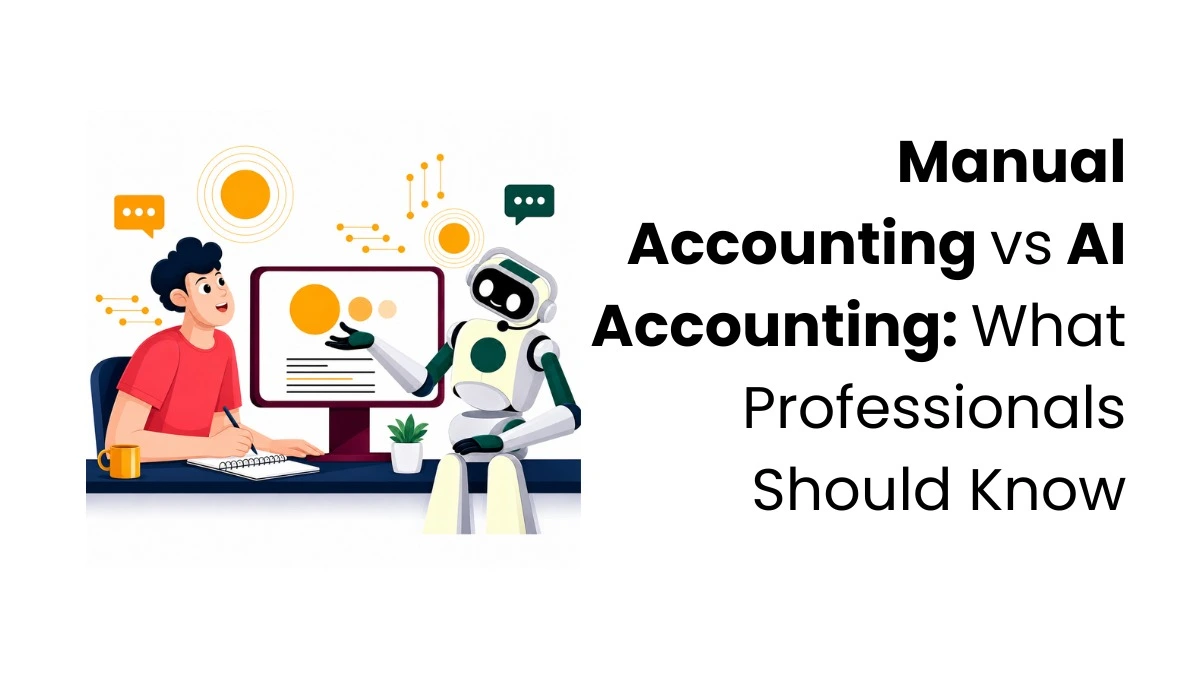
Even though AI is really powerful, it can’t replace human auditors. Think about it, auditors use their experience and common sense to understand what the data actually means. AI can point out risks and strange patterns, but it doesn’t fully understand real business situations or what managers are trying to do. Even if AI does a lot of the work, auditors still have to check the results and decide what to do next. So the future of auditing is not humans fighting machines. It’s humans and AI working together to make audits faster and better.
What Are the Benefits of AI in Auditing?
AI brings long-term benefits to the auditing profession and organizations.
- Faster work because AI does boring, repeated tasks automatically.
- Better accuracy because AI checks all the data, not just a small part.
- Better risk control because AI can predict problems before they happen.
- More trust because financial reports become clear and honest.
AI also transforms auditing into a strategic function that provides valuable insights beyond compliance.
What Are the Challenges of Using AI in Auditing?
AI offers many benefits, but it also comes with challenges.
- Sometimes the data used by AI is not good or clean. AI needs correct data to give correct answers. If the data is wrong, AI can also make mistakes.
- If AI learns from unfair data, it can give unfair results. This can lead to wrong decisions in an audit.
- Auditors must understand how AI gives its answers. If AI works like a black box and no one knows how it decided something, people may not trust it.
- Auditors also need training to use AI and computers. Without training, they cannot use AI properly.
- Companies must protect people’s data and follow privacy rules. They should use AI in a safe and honest way.
The Evolution of AI in Auditing: Possible Key Points
- As AI becomes more common in auditing, there will be more standards and guidelines introduced.
- There will be more emphasis on data privacy and strict security regulations to protect sensitive financial information.
- Strong Data governance frameworks and ethical AI policies will be needed to ensure the responsible use of AI in auditing.
- Training auditors in AI and data analytics will become more in demand in the future.
- Remote Auditing by Automating Data Analysis is another new possibility.
Conclusion
Now is the era of AI. Today, many auditors use AI to do simple and repeated work. AI also helps find risks, collect useful information, and catch fraud. But AI cannot replace human auditors, because people use their experience and thinking to make decisions. When companies use AI in the right way, audits become faster, clearer, and more trustworthy. In the future, we will see even better AI tools that make auditing easier and smarter. To stay updated and build your skills, explore accounting courses at Finprov Learning.
FAQs
1. What is Artificial Intelligence in auditing?
AI is a smart computer program that helps auditors check money and business records faster and easier. It can quickly look at numbers and find problems that humans might miss.
2. Why do auditors use AI?
AI can look at lots of numbers quickly, find mistakes, spot risks, and save time. This way, auditors can focus on the important decisions instead of boring tasks.
3. Can AI make mistakes?
Yes. AI can make mistakes if the data is wrong or incomplete. That’s why human auditors must always check their work carefully.
4. Can AI replace human auditors?
No. People are needed to understand the full picture and make the right decisions. AI is only a helper; it cannot think like humans.
5. How does AI find fraud?
AI looks for strange or unusual patterns in transactions. This helps find fraud early and prevent money loss.